

Top 10 Best Apps for New Immigrants in the USA in 2025
Moving to the United States is exciting but overwhelming. From learning English to finding housing to understanding the healthcare system, new immigrants face dozens of challenges in their first year. The right smartphone apps can make that transition dramatically easier. Updated January 2025, this guide covers the best apps for new immigrants in the USA that handle translation, government services, banking, transportation, and daily life essentials.
Quick Answer: The best apps for new immigrants in the USA include Duolingo for language learning, USCIS for immigration case tracking, Cash App for banking without traditional credit history, Google Translate for real-time communication, and WhatsApp for free international calls. These five apps alone cover the most critical needs during your first months.
Key Takeaways
- Duolingo and Babbel rank as the top language-learning apps, with Duolingo offering free access and Babbel providing more structured grammar lessons for $6.95/month.
- The official USCIS app lets you track your immigration case status, file forms, and access your online account from your phone in real time.
- Cash App and Chime are the most immigrant-friendly banking options because they do not require a Social Security number or credit history to open an account.
- Google Translate’s camera feature can translate signs, menus, and documents instantly in over 100 languages without needing an internet connection when you download language packs.
- According to the Migration Policy Institute, approximately 44.9 million immigrants live in the United States, and smartphone adoption among immigrant populations exceeds 85%, making mobile apps the most accessible resource available.
Quick Comparison Table
| App | Category | Cost | Key Feature |
|---|---|---|---|
| Google Translate | Translation | Free | Camera-based instant translation |
| Duolingo | Language Learning | Free (Premium $9.99/mo) | Gamified daily lessons |
| USCIS | Government/Immigration | Free | Case tracking and form filing |
| Cash App | Banking | Free | No SSN required for basic use |
| Communication | Free | Free international calls and texts | |
| Uber | Transportation | Free to download | Works without US credit card initially |
| Libby | Education/Reading | Free | Free library books with a library card |
| Mint | Budgeting | Free | Tracks spending and builds financial awareness |
| Healthcare.gov | Health Insurance | Free | Enroll in ACA marketplace plans |
| Remitly | Money Transfer | Low fees | Send money to home country affordably |
#1 – Google Translate
Overview
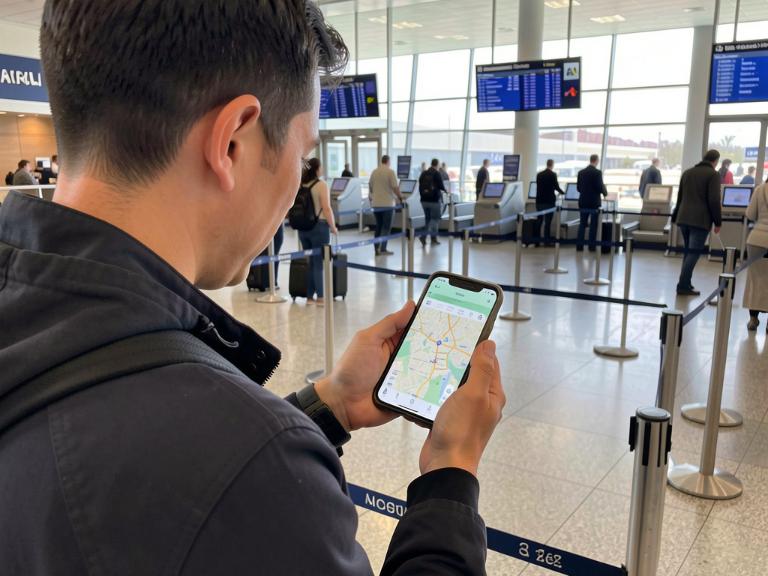
Google Translate is the single most important app you will download as a new immigrant. It supports over 100 languages and offers three translation modes: text input, voice conversation, and camera-based instant translation. The camera feature is a game-changer when you are reading street signs, restaurant menus, product labels, or government forms in English.
Pros and Cons
Pros: Completely free with no ads in the core translation features. Offline translation works after you download language packs (typically 50-100 MB per language). The conversation mode translates bilingual speech in near real-time. It integrates with other Google apps and your phone’s camera.
Cons: Translations can be inaccurate for complex sentences, legal documents, or idiomatic expressions. The offline mode is less accurate than online translation. Some less common languages have limited support compared to major languages like Spanish, Chinese, or Arabic.
Best For
Every single new immigrant regardless of their native language. If you download only one app from this list, make it Google Translate. It bridges the gap in every interaction where English is a barrier, from doctor’s visits to lease signings to parent-teacher conferences.
Tip: Download your language pack before you arrive in the US or while connected to Wi-Fi at your hotel or shelter. This ensures you can translate even when you do not have cellular data yet.
#2 – Duolingo
Overview
Duolingo is the world’s most downloaded education app with over 500 million registered users. It teaches English (and 40 other languages) through bite-sized gamified lessons that take 5-15 minutes per day. For immigrants who need to build English skills for work, citizenship tests, and daily life, Duolingo offers a structured starting point that feels more like a game than a textbook.
Pros and Cons
Pros: The free version is fully functional and ad-supported. Lessons adapt to your skill level through an initial placement test. Streak tracking and leaderboards keep you motivated. Duolingo now offers an English proficiency test accepted by some US universities and employers.
Cons: The free version has ads and limited “hearts” (lives). It focuses heavily on vocabulary and simple sentences rather than conversational fluency. You will need supplemental practice to develop speaking and listening skills for real-world situations.
Best For
Beginner to intermediate English learners who want a daily habit of language practice. It works especially well for immigrants who cannot afford formal ESL classes or who have irregular schedules that make classroom attendance difficult.
Important: According to the Migration Policy Institute, immigrants who achieve conversational English earn 20-30% more than those who do not, making language learning one of the highest-ROI investments you can make.
#3 – USCIS Official App
Overview
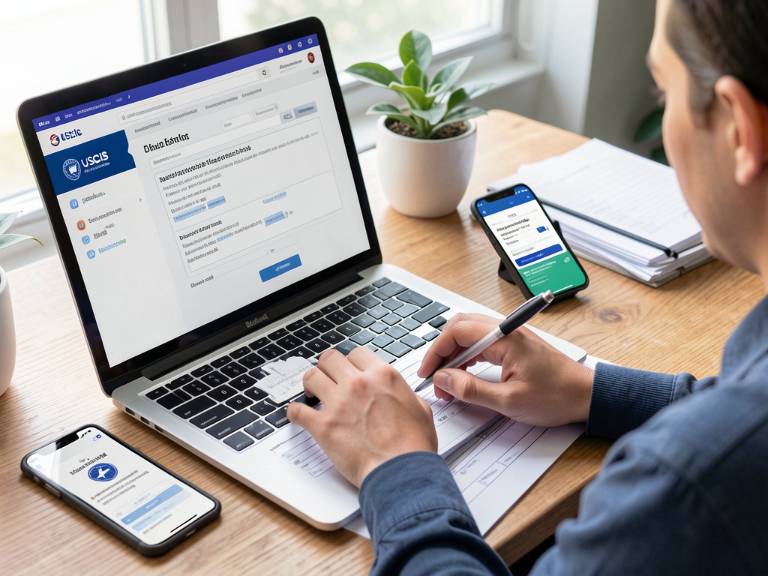
The official United States Citizenship and Immigration Services app is essential for anyone navigating the US immigration system. You can track your case status, receive push notifications when your case changes, file certain forms electronically, and access your USCIS online account. It also provides a direct locator for USCIS office locations and appointment scheduling.
Pros and Cons
Pros: Direct from the government agency, so information is accurate and up to date. Case tracking updates faster than checking the website manually. You can upload supporting documents directly from your phone camera. It includes a citizenship test study section with all 100 civics questions.
Cons: The app can be slow during high-traffic periods. Not all forms are available for mobile filing. You still need to use a computer for some complex filings. The interface is functional but not particularly user-friendly.
Best For
Anyone with a pending immigration case, asylum application, green card process, naturalization application, or work permit request. If you have any open case with USCIS, this app keeps you informed without needing to call the contact center and wait on hold for hours.
#4 – Cash App
Overview
Cash App by Square (now Block Inc.) is one of the most accessible financial tools for new immigrants. You can send money, receive money, and spend using a linked debit card without needing a traditional bank account, credit score, or in many cases a Social Security number. According to the Federal Reserve’s 2023 survey, 6% of US adults are unbanked and 16% are underbanked, and immigrants are disproportionately represented in both groups.
Pros and Cons
Pros: No minimum balance, no overdraft fees, no credit check. You can get a free Cash Card (debit card) that works anywhere Visa is accepted. Direct deposit works for paychecks. Bitcoin buying and selling is available. Peer-to-peer transfers are instant between Cash App users.
Cons: Sending money from a credit card carries a 3% fee. The standard withdrawal limit is $25,000 per week but lower for unverified accounts. Customer support is primarily through email and chat, not phone. There have been security concerns with scam-related losses.
Best For
Immigrants who need to receive paychecks, send money to family, and make purchases immediately upon arrival, even before they have established a traditional bank relationship. It serves as a bridge financial tool while you build your US banking history.
Warning: Never share your Cash App PIN or sign-in code with anyone. Scammers frequently target new immigrants through fake “agent” calls. Cash App support will never ask for your PIN or require you to send money to verify your account.
#5 – WhatsApp
Overview
WhatsApp is the dominant messaging platform outside the United States, used by over 2 billion people worldwide. For new immigrants, it is the primary way to stay in contact with family and friends in your home country without paying international calling or texting fees. It works over Wi-Fi or cellular data, supports group chats, voice calls, video calls, and document sharing.
Pros and Cons
Pros: End-to-end encryption for all messages and calls. Free to use with any internet connection. Works on Android, iPhone, and desktop. Supports group video calls with up to 32 people. Document sharing makes it easy to send photos of important papers to family back home.
Cons: Both parties need WhatsApp installed to communicate for free. It requires a phone number for registration. Some immigrant communities in the US use other platforms like WeChat, Telegram, or Signal instead, so you may need multiple messaging apps.
Best For
Every immigrant who needs to maintain relationships across borders affordably. It is also widely used within immigrant communities in the US for neighborhood groups, cultural associations, religious communities, and mutual aid networks.
#6 – Uber
Overview
Uber solves one of the first practical problems new immigrants face: getting around. In most US cities, public transportation is limited compared to other countries, and buying a car requires insurance, a license, and credit. Uber (and Lyft as an alternative) provides on-demand transportation in virtually every US metropolitan area and many smaller cities.
Pros and Cons
Pros: Available in over 10,000 cities worldwide. You can pay with a foreign credit card, debit card, or even cash in some markets. The app shows the fare upfront so there are no surprises. Ride tracking adds safety. Uber Eats is integrated for food delivery.
Cons: Surge pricing during peak hours can make rides expensive. It is not a substitute for car ownership in rural areas or cities with limited Uber availability. Wait times can be long in less populated areas. You need a US phone number to register.
Best For
Immigrants in urban and suburban areas who need reliable transportation for job interviews, grocery shopping, medical appointments, and airport transfers during their first weeks before they arrange a personal vehicle.
#7 – Libby
Overview
Libby by OverDrive connects you to your local public library’s entire digital collection of ebooks, audiobooks, and magazines for free. All you need is a library card, which most US public libraries issue to residents regardless of immigration status. According to the American Library Association, there are over 16,000 public library branches in the US, and the vast majority offer free library cards to anyone who lives in their service area.
Pros and Cons
Pros: Completely free with a library card. Huge selection including English learning materials, citizenship test prep books, career guides, and fiction. Audiobooks are excellent for English listening practice. The interface is clean and easy to use. You can send books to a Kindle device.
Cons: You need a physical library card from a participating library. Popular books may have waitlists for digital copies. Not all libraries have equally large digital collections. The app requires an internet connection to download books for offline reading.
Best For
Immigrants who want free access to English learning materials, citizenship study guides, career development books, and entertainment. It is especially valuable for families with children who need access to educational reading materials without cost.
Tip: Visit your nearest public library branch as soon as you have a proof of address. Many libraries issue cards on the spot. Some systems like the New York Public Library and Los Angeles Public Library offer digital cards you can apply for online.
#8 – Mint by Intuit
Overview
Mint is a free budgeting and financial tracking app that helps you see all your accounts in one place, track spending by category, set budgets, and monitor your credit score. For new immigrants unfamiliar with US costs, taxes, and financial norms, Mint provides visibility into where your money goes each month. According to the Consumer Financial Protection Bureau, financial literacy is a top challenge for immigrant populations, and budgeting tools significantly improve financial outcomes.
Pros and Cons
Pros: Free to use. Automatically categorizes transactions. Sends bill reminders and low-balance alerts. Tracks credit score changes over time. Shows spending trends month over month. Links to most US bank accounts and credit cards.
Cons: You must link financial accounts, which raises privacy concerns for some users. The app shows offers for financial products (credit cards, loans). It does not work well with non-US bank accounts. Occasional sync issues with smaller banks and credit unions.
Best For
Immigrants who have opened a US bank account and need to understand their spending patterns, avoid overdraft fees, and start building awareness of US cost of living in their area. It is particularly helpful for managing the shock of US prices if you are coming from a lower-cost-of-living country.
#9 – Healthcare.gov
Overview
The Healthcare.gov app and website is the official portal for enrolling in Affordable Care Act (ACA) health insurance plans. Many new immigrants do not realize that they may qualify for subsidized health insurance through the marketplace, and some lawfully present immigrants qualify for premium tax credits that dramatically reduce monthly costs. The app lets you compare plans, check eligibility, and enroll during open enrollment or special enrollment periods.
Pros and Cons
Pros: Official government source for ACA plans. You can compare all available plans in your area side by side. Premium tax credits are available for lawfully present immigrants with incomes between 100% and 400% of the federal poverty level. The application process walks you through eligibility step by step.
Cons: Open enrollment is typically November through January, with limited special enrollment windows outside that period. Undocumented immigrants are not eligible for ACA marketplace plans. The application can be complex and requires immigration status documentation. Not all areas have multiple plan options.
Best For
Lawfully present immigrants including green card holders, refugees, asylees, visa holders, and DACA recipients who need affordable health insurance. Having health insurance in the US is both legally beneficial and financially critical given the extremely high cost of uninsured medical care.
Warning: Do not go without health insurance in the US. A single emergency room visit can cost $1,500-$3,000. An ambulance ride averages $1,200. Hospital stays can exceed $10,000 per day. Even a basic ACA plan with subsidies can cost under $50/month for qualifying immigrants.
#10 – Remitly
Overview
Remitly is a digital money transfer service that lets you send money from the US to over 170 countries at lower fees than traditional wire services. According to the World Bank’s Migration and Development Brief, global remittances reached $656 billion in 2022, and immigrants regularly send money home to support family. Remitly offers competitive exchange rates and fees starting as low as $0.99 per transfer depending on the destination country.
Pros and Cons
Pros: Lower fees than Western Union or MoneyGram for most corridors. Exchange rates are close to the mid-market rate. Transfers can arrive in minutes to bank accounts or mobile wallets in many countries. Cash pickup options available at thousands of locations worldwide. First transfer often fee-free.
Cons: Transfer limits for new users (typically increase over time). Express transfers cost more than economy transfers. Some destination countries have limited payout options. You need to verify your identity with a government-issued ID, which may take 24-48 hours.
Best For
Immigrants who regularly send money to family in their home country. It is especially useful for those supporting parents, children, or extended family abroad. The app tracks all transfers and provides receipts for your financial records.

How to Choose the Right Apps for Your Situation
Not every app on this list will be equally useful for every immigrant. Your needs depend on your immigration status, English proficiency, financial situation, and where you settle in the US. Here is a simple framework to prioritize your downloads.
If you just arrived: Start with Google Translate, WhatsApp, and Cash App. These three handle communication, connection, and money immediately regardless of your status or language level.
If you have a pending immigration case: Download the USCIS app immediately and check it weekly. Pair it with a translation app for any notices or updates you do not fully understand.
If you are building your new life: Add Duolingo for language, Mint for budgeting, and Libby for free educational resources. These three help you build skills and financial stability over time.
If you are sending money home: Set up Remitly and compare its rates to Wise (formerly TransferWise) and your bank’s wire transfer fees. Even a 1-2% difference in exchange rates adds up to hundreds of dollars per year on regular transfers.
Common Myths vs Facts
Myth 1: You need a Social Security number to use any US app or service.
Fact: Many apps including Cash App, WhatsApp, Google Translate, Uber, and Libby work without an SSN. You only need an SSN for financial services that report to the IRS, like bank accounts that earn interest or credit cards.
Myth 2: All immigration information apps are official government tools.
Fact: Only the USCIS app (from U.S. Citizenship and Immigration Services) is an official government app. Many third-party apps claim to help with immigration but charge fees for services that are free on the official USCIS website. Always verify through uscis.gov directly.
Myth 3: You need a US phone number to use these apps.
Fact: Apps like Google Translate, Duolingo, Libby, and Mint work with any phone number or even just Wi-Fi. WhatsApp uses your existing number from any country. Only ride-sharing and some banking apps require a US number for full functionality.
Frequently Asked Questions
What apps do immigrants need most in the US?
The most essential apps for new immigrants are Google Translate for overcoming language barriers, Cash App or Chime for banking without a credit history, WhatsApp for free international communication, and the USCIS app for tracking immigration cases. These four cover the most urgent needs in your first weeks.
Can undocumented immigrants use these apps?
Most apps on this list work regardless of immigration status. Google Translate, Duolingo, WhatsApp, Uber, Libby, and Mint do not check your status. However, Healthcare.gov and some banking features require lawful presence or specific documentation. Cash App works without an SSN for basic sending and receiving.
How do new immigrants get a bank account without a credit score?
According to the FDIC, you can open a basic checking account with an alternative ID such as a foreign passport, consular ID, or in some cases an ITIN instead of a Social Security number. Banks like Chime, Wells Fargo, and Bank of America offer accounts accessible to immigrants. Cash App and PayPal also function as quasi-banking tools while you establish traditional accounts.
Are there apps specifically for learning English as an immigrant?
Duolingo and Babbel are the most popular general apps, but the US government also offers free resources through the US Department of Education’s EL Civics program and USA Learns (usalearns.org), which is a free online English learning platform designed specifically for adult immigrants. Many local community colleges also offer ESL apps through their programs.
What is the best way for immigrants to send money to their home country?
Remitly and Wise consistently rank as the most cost-effective options for international transfers. Remitly is better for cash pickup in countries with limited banking infrastructure, while Wise offers the most transparent exchange rates for bank-to-bank transfers. Always compare the total cost including fees and exchange rate margin before sending.
Final Thoughts
The best apps for new immigrants in the USA are not just conveniences. They are lifelines that bridge the gap between arrival and stability. From Google Translate breaking down language barriers to Cash App providing instant financial access to the USCIS app keeping your immigration case on track, these tools address the real challenges you will face in your first months and years. Download the ones that match your current situation, and add others as your needs evolve. The US immigration system is complex, but your smartphone can be the most powerful tool in your pocket for navigating it successfully.
The bottom line: Start with Google Translate, Cash App, and WhatsApp on day one, then layer in USCIS, Duolingo, and Remitly within your first month to build a complete digital toolkit for your new life in the United States.