
How to Find Your First Job in America: A Beginner’s Guide
As of 2025, the U.S. job market continues to evolve with remote work, AI-powered hiring tools, and shifting employer expectations. If you are searching for your first job in America, whether you are a new graduate, a career changer, or someone entering the workforce for the very first time, the process can feel overwhelming. The good news is that thousands of people successfully land their first American job every single month. This guide breaks down every step you need to take, from preparing your resume to negotiating your first offer, so you can approach the job search with confidence and a clear plan.
Quick Answer: Finding your first job in America involves identifying your target roles, building a clear resume, leveraging job boards and networking, preparing for interviews, and following up professionally. Most job seekers in the U.S. apply to 50-100 positions over 2-6 months before landing their first role. Success comes from consistency, tailored applications, and using multiple search channels simultaneously.
Key Takeaways
- Tailoring your resume to each job posting increases your callback rate by up to 30% compared to sending the same generic resume everywhere.
- Networking accounts for approximately 70% of all jobs filled in the United States, according to studies by the Harvard Business Review and LinkedIn research teams.
- The average job search in America takes 3-6 months for first-time job seekers, so starting early and staying consistent matters more than perfection.
- Using at least three different job search channels (online boards, networking, company websites) dramatically improves your chances of landing interviews.
- Practicing common interview answers for at least 5 hours before an interview significantly improves your performance and confidence level.
What You Need Before You Start Your Job Search
Before you send a single application, you need to have your foundational documents and accounts in order. Skipping this preparation phase is one of the most common mistakes first-time job seekers make. Employers in the U.S. expect you to present yourself professionally from the very first interaction.
Resume and Cover Letter
Your resume is your primary marketing document. For your first job in America, your resume should be one page, cleanly formatted, and tailored to the role you are applying for. Include your contact information, a brief summary or objective statement, your education, any relevant experience (including internships, volunteer work, and freelance projects), and your skills. Avoid graphics, photos, or complex formatting that can confuse Applicant Tracking Systems (ATS). According to SHRM (Society for Human Resource Management), roughly 75% of large employers use ATS software to filter resumes before a human ever sees them.
Your cover letter should complement your resume, not repeat it. Use it to explain why you are interested in the specific role and company, and highlight one or two experiences that directly connect to the job requirements. Keep it under 300 words and address it to a specific person whenever possible.
Professional Online Presence
Having a LinkedIn profile is essentially mandatory for professional job seekers in the United States. According to LinkedIn’s own data, the platform has over 1 billion members globally, and 95% of recruiters use it to find and vet candidates. Your profile should include a professional photo, a headline that describes what you do or want to do, a summary section, and at least basic entries for your education and experience.
Review your other social media accounts. Many employers search for candidates online before inviting them to interview. Remove or make private any content that could appear unprofessional. This includes inappropriate photos, offensive comments, or public complaints about previous employers or schools.
Work Authorization and Documentation
If you are not a U.S. citizen or permanent resident, you need to understand your work authorization status before applying. Common options include F-1 Optional Practical Training (OPT), H-1B sponsorship, and green card employment-based categories. The USCIS website provides official information on work permits and eligibility. Do not wait until you receive a job offer to figure this out. Know your status and be prepared to communicate it clearly to potential employers.
Important: You do not need to disclose your age, marital status, religion, or national origin on a resume or in an interview in the United States. The Equal Employment Opportunity Commission (EEOC) protects job seekers from discrimination based on these characteristics.
How to Find Job Openings in the U.S.
There are more ways to find job openings today than at any point in history. However, not every channel works equally well for every type of role. The most successful job seekers use a combination of methods rather than relying on just one.
Online Job Boards and Platforms
General job boards are the most visible starting point. Indeed is the largest job site in the United States, aggregating listings from thousands of sources including company career pages, staffing agencies, and other job boards. Glassdoor adds the advantage of company reviews and salary information. The U.S. government’s official job board, USAJobs.gov, lists federal government positions and is free to use.
Industry-specific job boards often yield better results than general ones because the competition is lower and the listings are more targeted. For tech roles, Dice and Stack Overflow Jobs are strong options. For nonprofit work, Idealist.org is the go-to resource. For remote and flexible positions, FlexJobs and We Work Remotely are popular choices.
Company Career Pages
Applying directly through a company’s own career page is sometimes more effective than going through a third-party job board. Large companies like Google, Amazon, Microsoft, and Salesforce receive millions of applications and often prioritize candidates who apply through their own portals because it shows direct interest. Make a list of 15-20 companies you admire and check their career pages weekly. Many companies also allow you to set up job alerts so you are notified when new positions open.
Networking and Referrals
Networking remains the single most effective job search strategy in America. According to a Jobvite Recruiter Nation Survey, 48% of recruiters say referrals are their best source of quality hires. A referral from a current employee can increase your chances of getting an interview by 4x compared to applying cold. Start with people you already know: family friends, former classmates, professors, neighbors, and members of community organizations.
Attend local meetups, industry conferences, and career fairs. Platforms like Meetup.com and Eventbrist list thousands of professional events across the country every month. Join relevant groups on LinkedIn and participate in discussions before asking for help. Building genuine relationships takes time, but even one meaningful connection can open a door that 100 cold applications cannot.
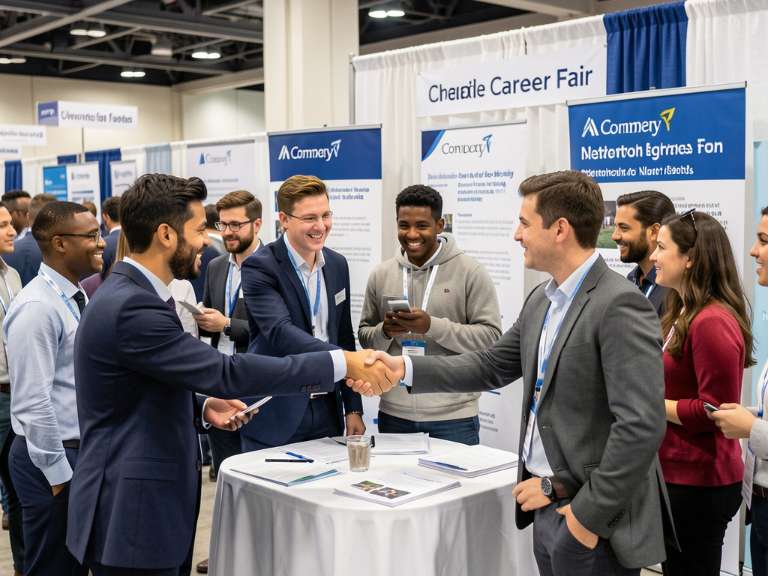
Tip: When networking, always lead with what you can offer rather than what you need. Share an article, make an introduction, or volunteer at an event. People are far more willing to help someone who contributes before they ask for favors.
Staffing Agencies and Recruiters
Staffing agencies like Robert Half, Adecco, and Randstad connect job seekers with employers, often for temporary, contract, or entry-level positions. These agencies can be especially helpful for first-time job seekers because they advocate for you and provide coaching on your resume and interview skills. There is typically no cost to you as a job seeper. The employer pays the agency’s fee once you are hired. Be honest with your recruiter about your experience level, salary expectations, and availability.
How to Write a Resume That Gets Noticed
Your resume has roughly 6-10 seconds to make an impression on a recruiter. That is the average time a hiring manager spends scanning a resume before deciding to read further or move on. For your first job in America, your resume needs to be concise, relevant, and easy to scan.
Formatting and Structure
Use a simple, single-column layout with clear section headings. Standard fonts like Arial, Calibri, or Times New Roman in 11-12 point size work best. Save your resume as a PDF unless the job posting specifically requests a Word document. This preserves your formatting across all devices and operating systems.
The typical structure for an entry-level resume is as follows: contact information at the top, a professional summary or objective (2-3 sentences), education section, experience section (including internships, volunteer work, and relevant projects), and a skills section. If you have no formal work experience, lead with your education and highlight relevant coursework, academic projects, or leadership roles in student organizations.
Using Action Verbs and Quantifying Results
Start every bullet point with a strong action verb. Words like “managed,” “created,” “analyzed,” “coordinated,” “developed,” and “implemented” signal initiative and capability. Whenever possible, include numbers to quantify your impact. For example, instead of saying “helped with social media,” write “created and scheduled 30+ social media posts per week, increasing follower engagement by 25% over three months.” Numbers give hiring managers a concrete sense of what you can accomplish.
Tailoring Your Resume for Each Application
This is the step that most first-time job seekers skip, and it is the step that makes the biggest difference. Read the job posting carefully and identify the key skills and qualifications the employer is seeking. Then adjust your resume to mirror that language. If the posting asks for “strong written communication skills,” make sure that phrase appears in your resume if it accurately describes your abilities. Many ATS systems rank candidates based on keyword matching, so this simple step can push your application to the top of the pile.
How to Prepare for Job Interviews
Getting an interview invitation means your application worked. Now you need to prepare thoroughly to convert that opportunity into an offer. According to a Glassdoor survey, the average U.S. company interviews 6-10 candidates for a single position. You are competing against a small group, and preparation is what separates the person who gets the offer from the ones who do not.
Common Interview Questions to Practice
Certain questions appear in almost every job interview. Prepare clear, concise answers for each of them. Here are the ones you should absolutely practice.
- “Tell me about yourself.” – Give a 90-second summary of your background, focusing on what connects you to this role.
- “Why do you want to work here?” – Reference something specific about the company, such as their mission, products, or recent news.
- “What is your greatest weakness?” – Name a real weakness but explain what you are actively doing to improve.
- “Where do you see yourself in five years?” – Show ambition that aligns with growth opportunities at the company.
- “Why should we hire you?” – Connect your skills directly to the job requirements and give a specific example.
STAR Method for Behavioral Questions
Many U.S. employers use behavioral interview questions that ask you to describe past experiences. The STAR method (Situation, Task, Action, Result) is the standard framework for answering these questions. Describe the situation you were in, the task you needed to accomplish, the specific actions you took, and the measurable result. Practice at least 5-7 STAR stories before your interview so you can adapt them to different questions.

Warning: Never speak negatively about a former employer, colleague, or school during an interview. Even if your experience was genuinely bad, frame it as a learning opportunity. Employers interpret negativity as a red flag about your professionalism and attitude.
What to Wear and Bring
Dress one level above the company’s daily dress code. If the office is business casual, wear business formal. If it is casual, wear smart casual. When in doubt, it is better to be slightly overdressed than underdressed. Bring 3-5 printed copies of your resume, a notepad and pen, a list of references, and any work samples or portfolio pieces if relevant. Arrive 10-15 minutes early. Turn your phone off completely, not just on silent.
What to Expect During the Hiring Process
Understanding the timeline and stages of the hiring process helps you manage your expectations and reduces anxiety. While every company operates differently, most follow a similar pattern for entry-level positions.
Typical Timeline
From application to offer, the average hiring process in the United States takes approximately 23-28 days, according to SHRM research data. Some companies move faster, especially for high-demand roles, while government positions and large corporations can take 2-3 months. Do not be discouraged by the waiting. Use this time to continue applying elsewhere and improving your skills.
Stages of the Process
Most hiring processes for entry-level roles include these stages: initial application, phone screening with a recruiter (15-30 minutes), a first-round interview with a hiring manager (30-60 minutes), possibly a second-round interview or skills assessment, background check, and finally a job offer. Some companies also include take-home assignments, panel interviews, or group exercises. Ask the recruiter at each stage what to expect next so you can prepare accordingly.
Handling Rejection
Rejection is a normal part of the job search. The average job seeker applies to dozens of positions before receiving an offer. According to Bureau of Labor Statistics data, the average unemployment duration for new entrants to the workforce is approximately 10-14 weeks. If you do not get a position, send a polite follow-up email thanking the interviewer and asking for any feedback. Sometimes this leads to being considered for future roles. Keep refining your approach and moving forward.
Common Mistakes First-Time Job Seekers Make
Avoiding common pitfalls can save you weeks or months of frustration. Here are the mistakes that trip up most people searching for their first job in America.
- Applying to every job with the same resume. Generic applications get generic results. Tailor each resume and cover letter to the specific posting.
- Waiting for the perfect job. Your first job does not have to be your dream job. It is a stepping stone that gets your foot in the door and builds your experience.
- Ignoring soft skills. Employers value communication, teamwork, problem-solving, and adaptability just as much as technical skills. Highlight these in your resume and interviews.
- Not following up after interviews. Sending a thank-you email within 24 hours of your interview keeps you top of mind and shows professionalism.
- Underestimating the power of local opportunities. Many first jobs come from local businesses, community organizations, and regional companies that post on local job boards rather than national sites.
Tip: Create a simple spreadsheet to track every application. Include columns for the company name, role, date applied, contact person, follow-up date, and current status. This keeps you organized and ensures no opportunity falls through the cracks.
How to Negotiate Your First Job Offer
Many first-time job seekers feel so grateful to receive an offer that they accept the first number mentioned without discussion. This is understandable, but it can cost you thousands of dollars over time. In most U.S. industries, especially in the private sector, salary negotiation is expected and respected.
According to a Salary.com compensation survey, 67% of employers expect some form of negotiation after extending an initial offer. Research the market rate for your role using tools like Glassdoor, Payscale, and the Bureau of Labor Statistics Occupational Outlook Handbook. When you receive an offer, express genuine enthusiasm, then ask if there is flexibility on the starting salary. Provide a specific range based on your research, and be prepared to explain why you deserve that range. Even a $2,000-$3,000 increase on your first job compounds significantly over a career.
Resources and Tools to Accelerate Your Search
Taking advantage of free and low-cost resources can dramatically speed up your job search. Many of these are provided by government agencies and nonprofit organizations specifically to help job seekers.
- CareerOneStop – Sponsored by the U.S. Department of Labor, this site offers resume builders, career assessments, and local job listings.
- USA.gov Disability Employment Resources – Specific support and job listings for job seekers with disabilities.
- State workforce development offices – Every U.S. state operates American Job Centers (also called One-Stop Career Centers) that offer free resume help, career counseling, and training programs.
- Bureau of Labor Statistics Occupational Outlook Handbook – Detailed information on hundreds of occupations including salary data, growth projections, and required education.
- Glassdoor and Payscale – Salary comparison tools to help you benchmark your offer.
Common Myths vs Facts
There are several persistent myths about finding your first job in America that can hold you back if you believe them. Let us clear up the most common ones.
Myth 1: You need a college degree to get a good first job
Fact: While a degree opens certain doors, many high-paying roles in technology, sales, skilled trades, and customer success do not require a four-year diploma. Companies like Google, Apple, and IBM have eliminated degree requirements for many positions, focusing instead on skills and demonstrated ability. Trade certifications, bootcamps, and self-taught skills are increasingly valued.
Myth 2: You should only apply if you meet 100% of the requirements
Fact: Job postings describe the ideal candidate, not the minimum candidate. Research from Harvard Business Review shows that women in particular tend to apply only when they meet all listed qualifications, while men apply when they meet roughly 60%. If you meet most of the requirements and can demonstrate willingness to learn, apply anyway.
Myth 3: Your first job determines your entire career
Fact: Your first job is important, but it is not permanent. The average American changes jobs 12 times during their career according to BLS data. Many people work in fields completely unrelated to their first job. Focus on learning, building transferable skills, and making connections. Your career path will evolve over time.
Frequently Asked Questions
How long does it take to find a first job in America?
The average job search for a first-time job seeker in the U.S. takes 3-6 months, according to Bureau of Labor Statistics data. This varies by industry, location, and how many applications you submit per week. Submitting 10-15 quality applications per week and networking actively can shorten this timeline significantly.
Can I get a job in America without work experience?
Yes. Many entry-level positions are designed for candidates with little or no formal work experience. Employers look for transferable skills from school projects, volunteer work, internships, extracurricular activities, and personal projects. Emphasize your willingness to learn, reliability, and relevant skills.
What is the best job board for finding your first job?
There is no single best board. Indeed is the largest and most comprehensive, but LinkedIn is better for professional and corporate roles. For government jobs, use USAJobs.gov. For startups and tech, try AngelList. Using multiple boards simultaneously gives you the broadest view of available opportunities.
Do I need a cover letter for every application?
Not always, but it is strongly recommended. A tailored cover letter can set you apart from other candidates, especially when you have limited experience. It shows effort and allows you to explain things your resume cannot, such as a career change or a gap in employment. If the posting says “cover letter optional,” submitting one still works in your favor.
How important is LinkedIn for finding a first job?
LinkedIn is extremely important. Over 95% of recruiters use LinkedIn to search for and evaluate candidates. Having a complete profile, connecting with professionals in your target industry, and engaging with content relevant to your field can lead to opportunities that never appear on job boards. Many recruiters will find you through LinkedIn before you even apply.
Final Thoughts
Finding your first job in America is a process that tests your patience, resilience, and adaptability. It requires more than just submitting applications online. The job seekers who succeed are the ones who prepare thoroughly, network genuinely, tailor every application, and treat rejection as feedback rather than failure. Use the resources available to you, whether that is your state’s American Job Center, free online courses, or mentors in your community. Every application you submit and every conversation you have brings you one step closer to that first offer letter.
The bottom line: finding your first job in America is achievable when you combine a strong resume, consistent applications across multiple channels, genuine networking, and thorough interview preparation. Start today, stay persistent, and remember that every professional you admire once stood exactly where you are now.