
What to Know Before Moving to Seattle as an Immigrant
Moving to a new country is one of the biggest decisions you will ever make. If you have chosen the Emerald City as your new home, this Seattle immigrant guide will help you understand everything from housing to healthcare. As of mid-2025, Seattle continues to be one of the fastest-growing cities in the United States, attracting immigrants from around the world for its tech economy, diverse communities, and natural beauty.
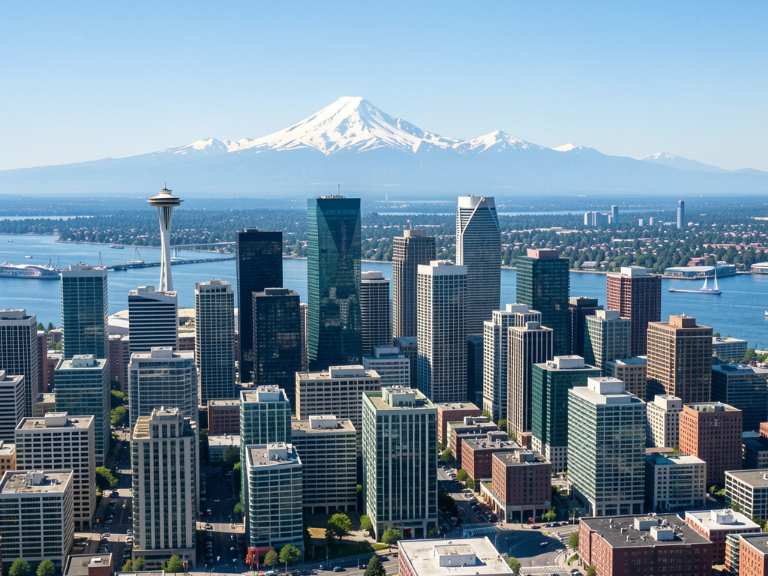
Seattle sits in the Pacific Northwest region of Washington State. It is home to major employers like Amazon, Microsoft, Boeing, and a thriving startup scene. The city has a foreign-born population of roughly 19 to 20 percent, according to the U.S. Census Bureau’s American Community Survey. That means one in five residents was born outside the United States.
Quick Answer: Seattle is a major immigrant hub in the Pacific Northwest with a strong job market, diverse neighborhoods, and extensive settlement services. Newcomers should focus on securing housing, understanding Washington State’s tax structure (no state income tax), enrolling in healthcare, and connecting with local immigrant resource centers within the first 30 days of arrival.
Key Takeaways for New Immigrants in Seattle
- Washington State has no personal income tax, which means your take-home pay may be higher than in states like California or New York, but sales tax in Seattle is approximately 10.25 percent as of 2025.
- The Seattle immigrant guide process typically starts with finding temporary housing within the first week, applying for a Social Security number within 10 days of arrival, and registering for health insurance during the open enrollment period or within 60 days of a qualifying life event.
- King County’s immigrant population includes large communities from China, India, Vietnam, the Philippines, Mexico, and Somalia, meaning you will find cultural organizations, ethnic grocery stores, and multilingual services across the city.
- Average rent for a one-bedroom apartment in Seattle ranges from $1,800 to $2,400 per month in 2025, depending on the neighborhood, so budgeting at least $2,500 to $3,500 per month for total living costs is realistic for a single person.
- Washington State allows eligible undocumented residents to apply for standard driver’s licenses, and the state expanded Medicaid (Apple Health) to low-income adults regardless of immigration status in 2024.
What Is the Immigrant Experience Like in Seattle?
Seattle is widely considered one of the more welcoming cities in the United States for immigrants. The city government has a dedicated Office of Immigrant and Refugee Affairs (OIRA) that coordinates services and advocates for inclusive policies. Washington State also has the Washington New Americans Program, which helps immigrants navigate citizenship applications and connect with legal services.
The immigrant experience varies depending on your country of origin, language skills, profession, and documentation status. However, Seattle’s infrastructure for newcomers is robust. You will find ESL (English as a Second Language) classes, job training programs, legal aid clinics, and cultural community organizations in nearly every corner of the city.
According to the Migration Policy Institute, Washington State is home to over 700,000 immigrants, and the Seattle metropolitan area accounts for the majority of that population. The city’s public school system serves students who speak more than 100 different languages.
Important: Seattle is not a sanctuary city in the formal legal sense, but King County has adopted limiting local law enforcement cooperation with federal immigration authorities. This means local police generally do not enforce federal immigration laws.
How Does the Seattle Job Market Work for Immigrants?
Seattle’s economy is driven by technology, healthcare, aerospace, maritime trade, and the life sciences. The city has one of the highest concentrations of STEM jobs in the country. Major employers actively recruit international talent, and many companies sponsor H-1B visas and green cards for qualified workers.
The tech sector dominates the job market. Amazon alone employs over 75,000 people in the Seattle area, and Microsoft’s Redmond campus is just 20 minutes from downtown. Both companies have large international workforces and established immigration support teams. Boeing, Starbucks, and Nordstrom also hire thousands of workers across skill levels.
For immigrants without tech backgrounds, the healthcare sector offers strong opportunities. The University of Washington Medical Center, Swedish Medical Center, and Virginia Mason Franciscan Health system are among the largest employers. Construction, hospitality, and food service also provide entry-level jobs that do not require advanced English proficiency.
According to the Bureau of Labor Statistics, the Seattle-Tacoma-Bellevue metropolitan area had an unemployment rate of approximately 3.8 percent as of early 2025, which is slightly below the national average. The median household income in Seattle is over $110,000, though this varies significantly by neighborhood and profession.

Finding Housing as a Newcomer
Housing is the single biggest challenge you will face in this Seattle immigrant guide. The city has experienced rapid population growth over the past decade, and housing supply has not kept pace. Vacancy rates hover around 4 to 5 percent, which makes the rental market competitive.
Most landlords require proof of income that is at least three times the monthly rent, a credit check, and references. As a newcomer, you may not have a U.S. credit history. In that case, you can offer to pay a larger security deposit (up to one month’s rent in Washington State), provide bank statements from your home country, or find a co-signer.
Here are some of the most immigrant-friendly neighborhoods in Seattle:
- Beacon Hill: One of the most diverse neighborhoods in the city, with large Vietnamese, Chinese, and Filipino communities. Average rent for a one-bedroom is around $1,700 to $2,000.
- Rainier Valley: Home to significant Somali, Ethiopian, and Latino communities. More affordable than central Seattle, with one-bedroom rents averaging $1,500 to $1,900.
- Columbia City: A historically rich area with East African, Asian, and Pacific Islander communities. Growing rapidly with new restaurants and shops.
- White Center: An unincorporated area just south of Seattle with a large Latino and Southeast Asian population. Known for affordable housing and authentic international cuisine.
- Northgate: A transitioning neighborhood in north Seattle with good transit access and relatively lower rents compared to Capitol Hill or Ballard.
Tip: Use the King County Housing Authority website and the Housing Justice Project run by the ACLU of Washington for free legal help if you face housing discrimination. Washington State law prohibits landlords from discriminating based on immigration status.
Healthcare Access for Immigrants in Seattle
Understanding the healthcare system is critical for any newcomer. In this Seattle immigrant guide, you should know that Washington State has been a leader in expanding healthcare access to immigrants, regardless of documentation status.
Starting in 2024, Washington expanded its Apple Health (Medicaid) program to cover low-income adults regardless of immigration status. This means undocumented residents who meet income requirements can access free or low-cost health insurance through the state. The income threshold is approximately 138 percent of the federal poverty level, which is about $20,783 for a single person in 2025.
For documented immigrants, the following options are available:
- Apple Health (Medicaid): Free or low-cost coverage for low-income residents. Lawfully present immigrants who have been in the U.S. for five years or more are eligible immediately. Some categories of immigrants, such as refugees and asylees, are eligible regardless of how long they have been in the country.
- Washington Health Benefit Exchange: The state’s ACA marketplace where you can purchase subsidized health insurance. Open enrollment typically runs from November through January, but you may qualify for a Special Enrolling Period if you recently moved to the U.S.
- Community Health Centers: Clinics like Neighborcare Health, International Community Health Services (ICHS), and Sea Mar Community Health Centers offer sliding-scale fees based on income and serve patients regardless of insurance status or immigration status.
The Washington State Department of Health reports that the state’s uninsured rate dropped to approximately 6 percent after the expansion of coverage to undocumented adults. This is one of the lowest uninsured rates in the nation.
What Are the Best Resources for Seattle Immigrants?
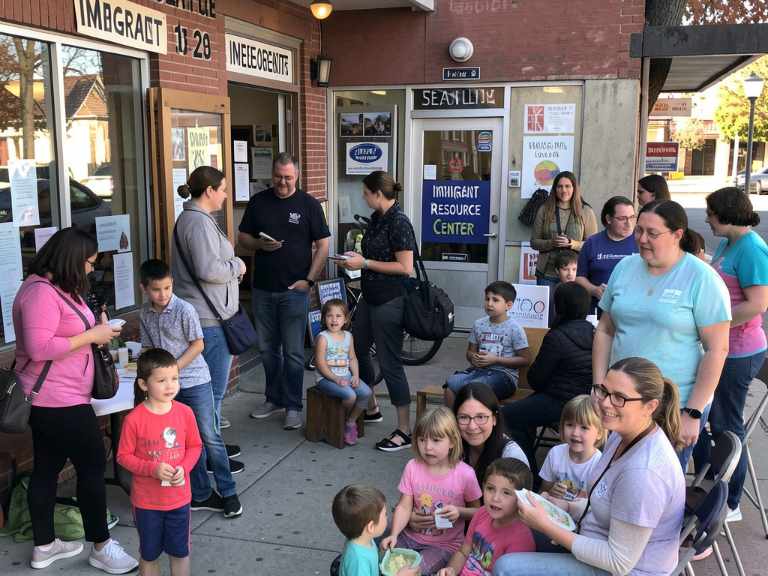
Seattle has one of the most extensive networks of immigrant support organizations in the country. These organizations offer free or low-cost services including legal assistance, ESL classes, job training, citizenship preparation, and cultural orientation.
Here are the most important resources you should know about:
- Seattle Office of Immigrant and Refugee Affairs (OIRA): The city’s central hub for immigrant services. They maintain a directory of service providers and run programs like the New Americans Fellowship.
- International Rescue Committee (IRC) Seattle: Provides resettlement services, employment assistance, and cultural orientation for refugees and asylees. They have offices in SeaTac and Seattle.
- OneAmerica: A leading immigrant advocacy organization in Washington State. They organize naturalization workshops, voter registration drives, and community events.
- Northwest Immigrant Rights Project (NWIRP): Provides free legal services to immigrants and refugees across Washington State. They handle asylum applications, family-based petitions, VAWA cases, and deportation defense.
- Asian Counseling and Referral Service (ACRS): Offers mental health services, ESL classes, employment programs, and citizenship assistance in multiple Asian languages.
- El Centro de la Raza: A Seattle-based organization serving the Latino community with housing assistance, education programs, legal services, and cultural events.
- Refugee Women’s Alliance (ReWA): Specializes in services for refugee and immigrant women, including domestic violence support, ESL, and job training.
How to Navigate Transportation in Seattle
Seattle’s public transit system is managed by Sound Transit, King County Metro, and the Seattle Department of Transportation. The Link light rail is the backbone of the system, connecting Seattle-Tacoma International Airport to downtown Seattle and extending east to Bellevue as of 2024.
A monthly ORCA pass for unlimited bus, light rail, and commuter rail rides costs $136 as of 2025 for an adult. Reduced-fare ORCA LIFT cards are available for low-income riders at $36 per month. You can apply for ORCA LIFT at community centers and service agencies throughout King County.
Seattle is also one of the most bike-friendly cities in the country, with over 200 miles of bike lanes and trails. The city’s bike-share program, Lime, offers affordable short-term rentals. If you plan to drive, you should know that Washington State requires all drivers to carry auto insurance, and you can obtain a driver’s license at any Department of Licensing (DOL) office.
Warning: Traffic congestion in Seattle is among the worst in the United States. Commuters spend an average of 74 hours per year stuck in traffic, according to the INRIX 2024 Traffic Scorecard. If you live near downtown, consider relying on public transit instead of driving.
Education and Schools for Immigrant Families
The Seattle Public Schools district is the largest in Washington State, serving approximately 54,000 students across 106 schools. The district has a dedicated International Education office that supports English Language Learners (ELL) and newcomer families.
Key programs for immigrant families include:
- Newcomer Centers: Some schools have dedicated newcomer programs that help recently arrived students transition into the U.S. school system with intensive English instruction and cultural orientation.
- Bilingual Programs: Seattle offers dual-language immersion programs in Spanish, Chinese (Mandarin), Vietnamese, and Japanese at select schools.
- Family Support Workers: Many schools employ family support workers who speak multiple languages and help immigrant families navigate the school system, access resources, and attend parent-teacher conferences.
- Head Start and ECEAP: Free early childhood education programs for low-income families, including immigrant families. ECEAP (Early Childhood Education and Assistance Program) is Washington’s state-funded pre-K program.
For higher education, the University of Washington is a top-ranked public university with a large international student population. Seattle University, Seattle Pacific University, and several community colleges (North Seattle College, South Seattle College, and Seattle Central College) also serve immigrant students. Community colleges are particularly popular among immigrants because they offer affordable tuition, ESL programs, and flexible schedules.
According to the National Center for Education Statistics, approximately 35 percent of Seattle Public Schools students speak a language other than English at home. The district’s graduation rate for the class of 2024 was approximately 83 percent, one of the highest among large urban districts in the country.
Understanding Washington State Taxes
One of the most attractive features of living in Washington for immigrants is the absence of a state personal income tax. This means your paycheck will not have state income tax withheld, which can increase your take-home pay by 5 to 10 percent compared to states like California or Oregon.
However, Washington compensates with other taxes:
- Sales Tax: The combined state and local sales tax rate in Seattle is 10.25 percent as of 2025. This applies to most goods and some services.
- Property Tax: If you own a home, you will pay property taxes to King County. The average effective property tax rate in King County is approximately 0.93 percent of assessed value.
- Capital Gains Tax: Washington State imposes a 7 percent tax on the sale of long-term capital gains exceeding $250,000. This was upheld by the Washington State Supreme Court in 2023.
- B&O Tax: Businesses in Washington pay a Business and Occupation tax based on gross receipts, not income. This affects self-employed immigrants and small business owners.
If you are employed by a company, you will still pay federal income tax, Social Security tax (6.2 percent), and Medicare tax (1.45 percent). Self-employed individuals pay both the employee and employer portions of Social Security and Medicare, totaling 15.3 percent.
Common Myths vs Facts About Living in Seattle as an Immigrant
There are several misconceptions about Seattle that can mislead newcomers. Here are the most common ones debunked:
Myth 1: Seattle is too expensive and impossible to afford on an immigrant salary
Fact: While Seattle is expensive compared to the national average, the lack of state income tax helps offset costs. Many immigrant families share housing, use public transit, and take advantage of free community resources. The MIT Living Wage Calculator estimates that a single adult needs to earn approximately $25.88 per hour to cover basic expenses in King County, but families of four can manage on less per person by sharing housing costs.
Myth 2: Seattle is not welcoming to immigrants
Fact: Seattle consistently ranks among the most immigrant-friendly cities in the U.S. The city government actively funds immigrant services, and community organizations provide extensive support. According to the New American Economy, immigrants contribute over $28 billion annually to the Seattle metro area’s GDP.
Myth 3: You need to speak perfect English to find a job in Seattle
Fact: While English proficiency helps, many employers in Seattle hire workers who speak limited English, especially in construction, food service, manufacturing, and warehouse work. Companies like Amazon have multilingual workforces and provide translation services. ESL classes are widely available and often free through community colleges and nonprofits.
Step-by-Step Checklist for Your First 30 Days in Seattle
This practical checklist will help you prioritize the most important tasks when you first arrive:
- Day 1 to 3: Secure temporary housing. Use Airbnb, extended-stay hotels, or contact immigrant service organizations for emergency housing assistance.
- Day 3 to 7: Apply for a Social Security number at your nearest Social Security Administration office. You will need your passport, visa, and I-94 arrival record.
- Day 7 to 14: Open a bank account. Chase, Bank of America, and Wells Fargo accept foreign passports. Credit unions like BECU and Verity Credit Union are also immigrant-friendly.
- Day 7 to 14: Get a local phone plan. T-Mobile, AT&T, and Verizon all offer prepaid plans that do not require a Social Security number.
- Day 14 to 21: Apply for Apple Health (Medicaid) or enroll in a health insurance plan through the Washington Health Benefit Exchange.
- Day 14 to 21: Register your children at your local public school. Bring immunization records, proof of address, and any prior school transcripts.
- Day 21 to 30: Enroll in ESL classes at a community college or nonprofit. Contact the Seattle Public Library, which offers free ESL conversation groups.
- Day 21 to 30: Connect with a local immigrant service organization for ongoing support, legal guidance, and community connections.
Pro Tips for Thriving as an Immigrant in Seattle
Beyond the basics, here are practical strategies that will help you build a successful life in Seattle:
- Build your credit history fast. Open a secured credit card through your bank or a credit union. Use it for small purchases and pay the balance in full each month. After six to twelve months, you will have a U.S. credit score that landlords and lenders will accept.
- Network through cultural communities. Join ethnic associations, religious organizations, or cultural groups related to your country of origin. These networks often lead to job opportunities, housing leads, and social support that you will not find online.
- Learn the bus system before buying a car. King County Metro buses cover the entire city and are free within the downtown Ride Free Area (though this program may change). A car in Seattle comes with parking costs of $150 to $300 per month and high insurance rates.
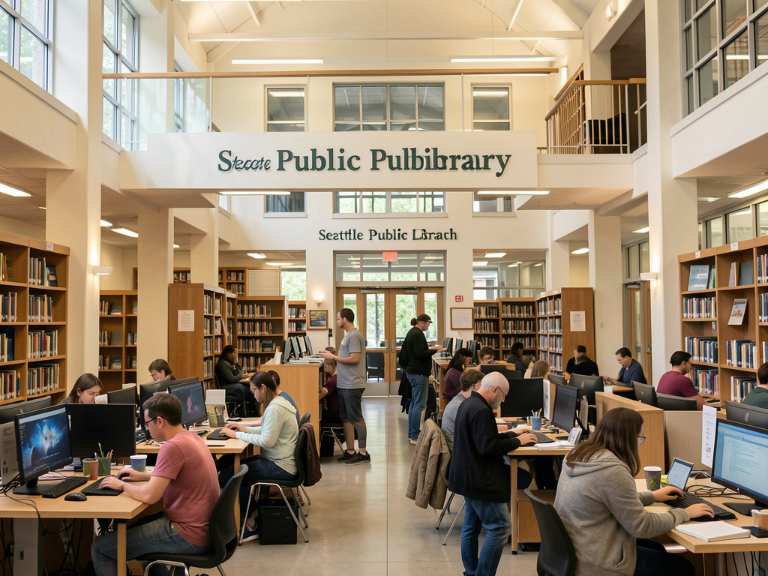
- Take advantage of the Seattle Public Library. The library system offers free computer access, job search assistance, citizenship prep classes, tax preparation services, and a massive collection of books and media in multiple languages.
- Understand your tenant rights. Washington State has strong tenant protections. Landlords must provide 120 days’ notice for rent increases of 5 percent or more, and they cannot evict without a court order. The Tenant Law Center in Seattle offers free legal advice.
Frequently Asked Questions
How long does it take to get a green card through employment in Seattle?
The employment-based green card process typically takes 18 months to 3 years depending on your country of origin and visa category. EB-2 and EB-3 categories for skilled workers from countries like India and China often face multi-year backlogs. The Northwest Immigrant Rights Project can help you understand your specific timeline.
Can undocumented immigrants get healthcare in Seattle?
Yes. Washington State expanded Apple Health (Medicaid) to cover low-income adults regardless of immigration status starting in 2024. Community health centers like Neighborcare Health and ICHS also provide care on a sliding fee scale regardless of documentation. Emergency rooms are required by federal law to treat all patients regardless of status.
What is the cost of living in Seattle for a family of four?
A family of four should budget approximately $6,000 to $8,500 per month for total living costs in Seattle as of 2025, according to the Economic Policy Institute’s Family Budget Calculator. This includes housing, food, transportation, healthcare, and childcare. Costs are lower if you live in south King County or the suburbs.
Is Seattle safe for immigrants?
Seattle’s overall crime rate is moderate compared to other large cities of similar size. Property crime is more common than violent crime. Neighborhoods like Rainier Beach and parts of South Park have higher crime rates, while areas like Ballard, Queen Anne, and Madison Park are among the safest. The Seattle Police Department has a Community Outreach unit that works with immigrant communities.
How do I find an immigration lawyer in Seattle?
The Northwest Immigrant Rights Project (NWIRP) provides free or low-cost legal services to immigrants in Washington State. The American Immigration Lawyers Association (AILA) also has a lawyer referral service. Be notario fraud is common in immigrant communities, so always verify that you are working with a licensed attorney or an accredited representative from a Department of Justice-recognized organization.
Final Thoughts on This Seattle Immigrant Guide
Seattle offers genuine opportunities for immigrants who are willing to plan carefully and tap into the city’s extensive support network. The combination of a strong job market, no state income tax, expanding healthcare access, and a well-established immigrant services infrastructure makes it one of the best cities in the United States for newcomers. The key is to start with the basics: secure housing, get your documents in order, connect with a community organization, and build your English skills and credit history as quickly as possible.
This Seattle immigrant guide is not meant to be exhaustive, but it gives you a solid foundation. Every immigrant’s journey is different, and the resources listed above can help you navigate the specifics of your situation. Do not hesitate to reach out to the organizations mentioned here. They exist specifically to help people like you succeed.
The bottom line: Seattle is a city where immigrants can thrive if they arrive prepared, connect with the right resources, and take advantage of the strong community networks that make the Emerald City one of the most welcoming places in the Pacific Northwest.