Sending money to someone in another country from the USA can seem tricky at first. You might wonder about the best way to do it, how much it will cost, or if it’s even safe. Lots of people feel the same way when they first look into How to Send Money Internationally from the USA.
But don’t worry, it’s much simpler than you think! We’ll walk you through it step-by-step, making it easy to get your money where it needs to go. Get ready to learn the easiest ways to send funds overseas.
Key Takeaways
- You will learn about different methods for sending money abroad from the USA.
- We will explain the typical costs involved in international money transfers.
- You will discover how to choose the safest and most reliable transfer services.
- Tips for getting the best exchange rates will be shared.
- Simple steps to complete your first international money transfer will be provided.
Understanding International Money Transfers
Sending money to friends or family in another country is a common need for many people living in the USA. Whether it’s for a loved one’s birthday, to help them with living expenses, or to pay for goods and services, the process needs to be clear and simple. It’s important to know that there are various options available, and each one has its own set of advantages.
We’ll explore these options so you can pick the one that fits your needs best.
Why People Send Money Overseas
People send money internationally for many reasons. Some send support to family members living abroad. Others might be buying items from foreign sellers or investing in businesses overseas.
Students studying in other countries often rely on funds from home. It’s a way to stay connected and provide for those who matter most, no matter the distance.
The desire to help loved ones is a major driver. For instance, a parent in the USA might regularly send money to a child studying in Europe for tuition and living costs. Or, someone might send money to help a relative in their home country with medical bills.
These transfers are often vital for the well-being of the recipients.
Beyond personal needs, businesses also engage in international money transfers. A small e-commerce shop in the USA might pay a supplier in Asia for goods. An investor might send funds to a foreign market to buy stocks or property.
These transactions are part of the global economy.
Common Challenges for Beginners
When you’re new to sending money internationally, a few things can seem confusing. One of the biggest concerns is cost. You want to know how much you’ll pay in fees and how the exchange rate will affect the amount received.
Another worry is security – ensuring the money arrives safely and to the right person.
People often wonder about the different services available. There are banks, money transfer specialists, and even some apps that offer this service. Deciding which one is best can feel overwhelming.
You might also be unsure about the documents you need or the time it will take for the money to reach its destination.
The exchange rate is a key factor. A poor exchange rate can mean that less money arrives at the other end than you expected, even if the fees are low. It’s like getting less value for your dollars.
So, understanding how exchange rates work and how they are applied is crucial for making smart choices.
Popular Ways to Send Money Internationally from the USA
There are several popular ways to send money from the USA to other countries. Each method has its own pros and cons when it comes to speed, cost, and convenience. We will look at the most common services that people use today.
Knowing these options will help you make a well-informed decision for your specific transfer needs.
Online Money Transfer Services
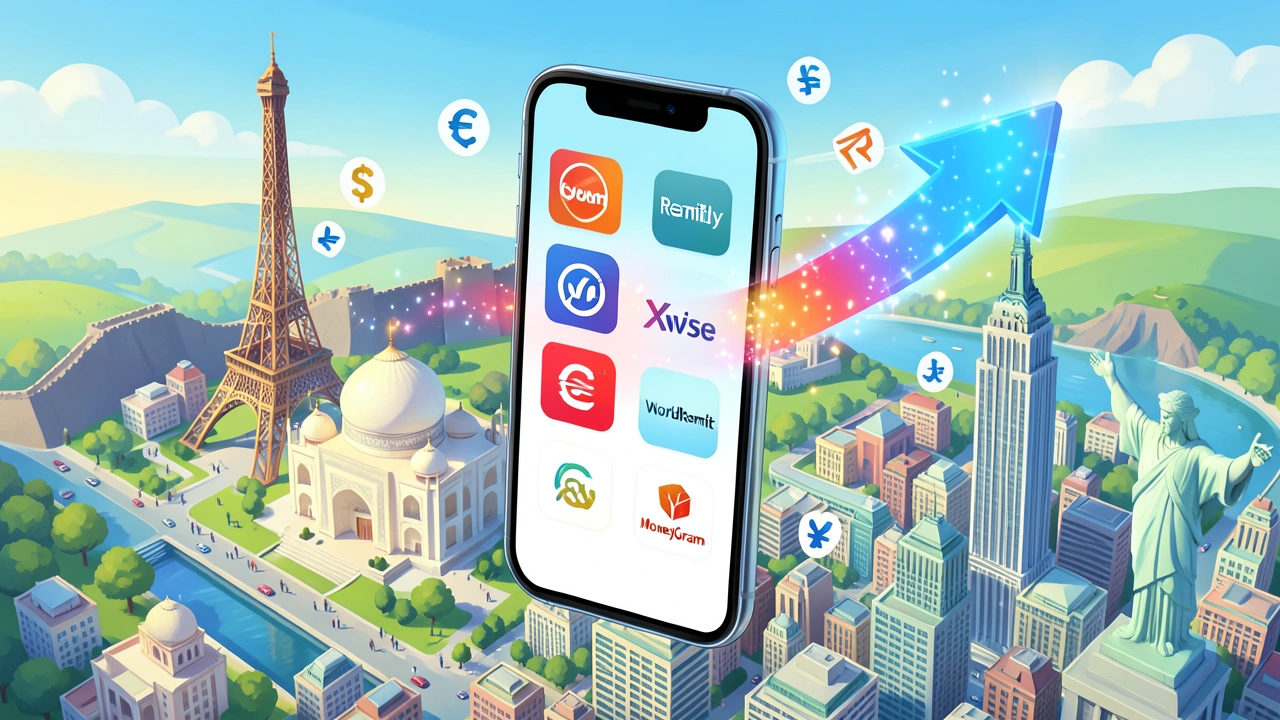
Online money transfer services are a very popular choice for many people. These companies operate mainly through websites and mobile apps. They are designed to be fast and often offer competitive exchange rates and fees.
Services like Wise (formerly TransferWise), Remitly, Xoom (a PayPal service), and WorldRemit fall into this category.
These platforms make it easy to compare prices and see exactly how much the recipient will get before you confirm the transfer. You can usually fund your transfer with a bank account, debit card, or credit card. The recipient can then receive the money directly into their bank account, or sometimes pick it up as cash at a local agent.
The process is typically very straightforward. You create an account, provide the recipient’s details (like their bank name, account number, and sometimes their address), choose the amount you want to send, and then pay. Many of these services also offer features like real-time tracking of your transfer, so you can see where your money is at all times.
How Online Services Work
These services work by leveraging technology to connect people who need to send money with those who need to receive it. They often use a network of local banks and payment partners around the world. When you send money, it might move through a series of accounts to reach its final destination.
The key advantage is efficiency. By cutting out many of the traditional banking steps, they can offer lower fees and faster transfer times. They also specialize in foreign exchange, meaning they can often provide better rates than traditional banks.
It’s a modern approach to an old need.
For example, let’s say you want to send $500 to Mexico. With an online service, you would go to their website or app. You’d enter the amount, choose the destination country, and then input the recipient’s bank details in Mexico.
The service would show you the current exchange rate and the fees. After you confirm and pay, the money is sent. It might arrive in the recipient’s account within minutes, hours, or a day or two, depending on the service and the countries involved.
Benefits of Using Online Services
- Convenience: You can start a transfer from anywhere with an internet connection, at any time.
- Cost-Effectiveness: Generally, they offer lower fees and better exchange rates compared to traditional banks.
- Speed: Many transfers can be completed within minutes or a few hours, with others taking up to 1-2 business days.
- Transparency: You can see the total cost, including fees and the exchange rate, before you commit to the transfer.
The ease of use is a big draw. You don’t need to visit a physical branch. Everything can be handled from your smartphone or computer.
This saves time and effort, especially for busy individuals. The ability to compare rates from different providers instantly is also a significant benefit. It empowers users to find the best deal for their money.
Many services also provide customer support through chat, phone, or email. This helps if you encounter any issues or have questions during the transfer process. Features like rate alerts can also be useful, notifying you when the exchange rate reaches a level you’re happy with.
Bank Wire Transfers
Bank wire transfers are a traditional method for sending money internationally. When you go to your bank to send money overseas, you are likely using a wire transfer. This method is generally considered very secure and reliable, especially for large amounts of money.
However, it often comes with higher fees and less favorable exchange rates compared to online services.
The process involves providing your bank with the recipient’s full name, address, bank name, and account number. You will also need the bank’s SWIFT or BIC code. Your bank will then initiate the transfer through international banking networks.
This can take several business days to complete.
While banks offer a sense of security, it’s important to be aware of all the costs involved. These can include an outgoing wire fee from your bank, an incoming wire fee from the recipient’s bank, and a markup on the exchange rate. For smaller amounts, these costs can add up significantly, making it a less attractive option for everyday transfers.
When Bank Transfers Might Be a Good Choice
Bank wire transfers can be a suitable option in certain situations. If you are sending a very large sum of money, the security and established process of a bank might provide peace of mind. Some individuals also prefer using their existing bank for familiarity and trust, especially if they are not comfortable with newer online platforms.
Another scenario is when the recipient’s country has limited access to or less developed online money transfer networks. In such cases, a bank transfer might be the most straightforward or only available option. It’s a solid, albeit sometimes expensive, way to move money across borders.
For example, a business might use bank wire transfers to pay for a significant international purchase, like importing machinery. The value of the transaction might be high enough that the bank’s fees are a smaller percentage of the total, and the assurance of a direct bank-to-bank transfer is prioritized. Also, if the recipient is an elderly person not comfortable with technology, a bank transfer coordinated by a family member might be preferred.
Money Transfer Services with Physical Locations
Some services allow you to send money internationally from a physical agent location. Companies like Western Union and MoneyGram have a vast network of branches around the world. This can be very convenient if you or the recipient don’t have easy access to online banking or prefer to deal with cash.
You can visit an agent, fill out a form with the recipient’s details, hand over the cash you want to send, and pay the fees. The recipient can then often pick up the money in cash at another agent location in their country, often within minutes or hours. This is sometimes called a remittance service.
While the speed of cash pickup can be appealing, the fees and exchange rates with these services can sometimes be higher than online-only options. It’s always a good idea to compare the total cost, including fees and the exchange rate, before you send. The convenience of cash pickup, however, can be invaluable for those who need it.
Cash Pickup Benefits
The main advantage of money transfer services with physical locations is the option for cash pickup. This is incredibly useful for people who may not have bank accounts or who need to send money to someone who prefers or needs to receive cash. It bypasses the need for banking infrastructure on the recipient’s end.
These services can also be helpful in emergencies when immediate cash is required. The speed at which some cash pickups can be made is a significant benefit. For example, if a family member abroad has an urgent medical need that requires cash payment, a quick cash transfer can be essential.
Furthermore, for individuals who are less tech-savvy or prefer face-to-face interaction, visiting a physical agent offers a sense of security and clarity. They can ask questions directly to an agent and ensure they understand the transaction details. This personal touch is something that purely online services cannot replicate.

Comparing Costs: Fees and Exchange Rates
When you send money internationally, the total cost isn’t just the fee you see upfront. It’s a combination of the transfer fee and the exchange rate. Understanding both is key to making sure your money goes as far as possible.
Understanding Transfer Fees
Transfer fees are the charges that money transfer services or banks add to your transaction. These fees can be a fixed amount, a percentage of the money you send, or a combination of both. Some services might advertise “zero fees,” but often this means they are making their profit through a less favorable exchange rate instead.
Fees can vary greatly between different providers. For example, a bank might charge a flat fee of $25-$50 for a wire transfer. Online services might charge anywhere from $0 to $10 for a transfer, depending on the amount and the speed you choose.
Some services offer lower fees for larger transfers or for using a bank account to fund the transfer instead of a credit card.
It’s important to look at the total cost. This includes all fees. Some services break down their fees, while others combine them into one charge.
Always ask for a full breakdown if it’s not clear. A service with a slightly higher upfront fee but a much better exchange rate might end up being cheaper overall than a service with a low fee but a poor exchange rate.
The Impact of Exchange Rates
The exchange rate is the value of one currency in relation to another. When you send money from USD to EUR, for example, the exchange rate determines how many Euros the recipient gets for your dollars. Banks and money transfer services make money by offering an exchange rate that is slightly different from the mid-market rate (the rate you see on Google or Reuters).
This difference is called a markup. A larger markup means the service is keeping more of the value for itself. For example, if the mid-market rate is 1 USD = 0.90 EUR, a service might offer you 1 USD = 0.87 EUR.
For every $100 you send, you would lose $3 due to the exchange rate alone, on top of any fees. Over time, these small differences add up.
When comparing services, it’s crucial to look at the rate they are offering you for the currency you are sending. Some services are very transparent about their rates, while others can be more opaque. Always check the final amount that will be received by the recipient.
This gives you the clearest picture of the true cost of the transfer.
Example: Comparing Costs
Let’s say you want to send $1,000 USD to the United Kingdom, and the mid-market exchange rate is 1 USD = 0.79 GBP.
| Service | Transfer Fee | Exchange Rate Offered | Total Cost to Send | Amount Received (GBP) |
|---|---|---|---|---|
| Online Service A | $5 | 1 USD = 0.77 GBP | $1,005 | £770 |
| Bank Wire Transfer | $40 | 1 USD = 0.78 GBP | $1,040 | £780 |
| Online Service B | $0 (promotional) | 1 USD = 0.76 GBP | $1,000 | £760 |
In this example, even though Online Service B has no transfer fee, it offers the worst exchange rate, resulting in the recipient getting the least amount of money (£760). The Bank Wire Transfer has the highest fee but a better rate than Service B, leading to £780 received. Online Service A charges a fee but provides a better exchange rate than Service B, resulting in £770 received.
This shows why comparing both fees and rates is vital.
Tips for Getting the Best Exchange Rate
To get the best value for your money, follow these tips:
- Compare providers: Always check several different money transfer services before you make a decision. Use comparison websites to get an overview.
- Look beyond the fee: Don’t just focus on the transfer fee. A low fee with a poor exchange rate can cost you more in the long run.
- Check the mid-market rate: Know what the current mid-market exchange rate is. This helps you spot how much a provider is marking up their rate.
- Consider timing: Exchange rates can fluctuate. If you don’t need to send money immediately, you might be able to wait for a more favorable rate. Some services offer rate alerts.
- Look for first-time offers: Many online services offer fee-free or discounted transfers for your first transaction to attract new customers.
Understanding the mid-market rate is like knowing the true value of something before you buy it. Websites like XE.com or Google’s currency converter can show you this rate. By comparing this to the rate offered by a money transfer service, you can quickly see their markup.
Services that are closer to the mid-market rate are generally better for you.
Timing can also play a role. Currency markets are always moving. If you have flexibility, you might be able to send money when your desired exchange rate is more favorable.
Some services allow you to set up alerts, so you get a notification when the rate reaches a certain level. This can help you time your transfer for maximum value.

Choosing a Safe and Reliable Service
Safety and reliability are paramount when sending money internationally. You need to be confident that your funds will reach the intended recipient without issues and that your personal and financial information is protected.
What Makes a Service Trustworthy?
A trustworthy money transfer service will typically be regulated by financial authorities in the countries where it operates. In the USA, this usually means being licensed by state regulators and potentially overseen by federal agencies. These regulations are in place to protect consumers.
Look for services that clearly state their security measures. This includes encryption for their website and app, and secure methods for storing your data. Reading reviews from other users can also provide insights into a service’s reliability.
A company with a long history and a good reputation is usually a safe bet.
Furthermore, transparent communication is a sign of a reliable service. They should be upfront about fees, exchange rates, and transfer times. Customer support should be accessible and responsive.
If a service is hard to contact or doesn’t provide clear information, it’s a red flag.
Regulatory Compliance
Regulatory compliance is a crucial indicator of a service’s legitimacy. In the United States, money transmitters must comply with various laws, including the Bank Secrecy Act (BSA) and anti-money laundering (AML) regulations. This means they have systems in place to detect and report suspicious transactions.
When a service is licensed and regulated, it means they are subject to oversight and audits. This provides a layer of protection for consumers. For example, if a company operates illegally, it might disappear with your money.
Licensed companies are less likely to do so because they have a lot to lose, including their operating license.
You can often find information about a company’s licenses and regulatory status on their website, usually in the “About Us” or “Legal” section. Reputable services are proud of their compliance and make this information readily available. This due diligence helps ensure your money is handled responsibly.
Security Features to Look For
When using online services, look for websites that use “HTTPS” in their web address and a padlock icon in your browser’s address bar. This indicates that the connection is encrypted, protecting the data you send. Two-factor authentication (2FA) is another important security feature.
It adds an extra layer of protection to your account login.
Reputable services will also have clear privacy policies that explain how they collect, use, and protect your personal information. They should detail the steps they take to prevent fraud and unauthorized access to your account. Be wary of any service that asks for excessive personal information without a clear reason.
Monitoring your account activity regularly is also a good practice. Most services provide transaction histories. Review these periodically to ensure all transactions are legitimate.
If you see any activity you don’t recognize, report it immediately to the service provider.
Customer Reviews and Reputation
Customer reviews can be a valuable source of information about a money transfer service. Websites that host reviews, such as Trustpilot or Google Reviews, can offer real-world feedback from actual users. Look for patterns in the reviews, both positive and negative.
Pay attention to comments about transfer times, customer service responsiveness, hidden fees, and the ease of using the platform. A few negative reviews are normal for any service, but if there’s a large number of complaints about the same issue, it’s a cause for concern. A strong, positive reputation built over time is a good indicator of a reliable service.
You can also check consumer protection websites or forums for any widespread complaints or warnings about specific services. This extra research can help you avoid potentially problematic providers and choose one that has a proven track record of customer satisfaction and reliability.

Practical Steps for Your First International Transfer
Now that you understand the options, costs, and safety considerations, let’s walk through the actual steps for making your first international money transfer. It’s designed to be as simple as possible.
Step 1: Gather Recipient Information
Before you start, make sure you have all the necessary details about the person you are sending money to. This is crucial for ensuring the money goes to the correct place without delays.
- Full Name: The recipient’s complete legal name, exactly as it appears on their identification.
- Address: Their current residential address, including city and country.
- Bank Details (if applicable): If the money is going into their bank account, you’ll need:
- Bank Name
- Account Number
- Bank Routing Number (like IBAN for Europe, or SWIFT/BIC code for the bank itself)
- Phone Number: A contact number for the recipient, which can be useful for confirmations or if there are any issues.
Double-check all this information carefully. Even a small typo in an account number or name can cause the transfer to be delayed or rejected. It’s often a good idea to ask the recipient to send you their details in writing to avoid any misunderstandings.
Step 2: Choose Your Transfer Method and Provider
Based on your needs and the information we’ve discussed, select the method and provider that best suits you. Consider:
- Speed: How quickly does the money need to arrive?
- Cost: What are the total fees and exchange rate?
- Convenience: Do you prefer online, mobile app, or an in-person location?
- Recipient’s Needs: Does the recipient need cash, or is a bank deposit okay?
For example, if you need to send money quickly to a bank account and want a good rate, an online service like Wise or Remitly might be best. If the recipient needs cash urgently and doesn’t have a bank account, a service like Western Union could be more suitable, despite potentially higher costs.
Step 3: Initiate the Transfer
Once you have your recipient’s details and have chosen a provider, you can start the transfer. This usually involves:
- Signing Up/Logging In: Create an account or log in to your existing account on the provider’s website or app.
- Entering Transfer Details: Specify the amount you want to send and the currency you want the recipient to receive. The service will then show you the exchange rate and fees.
- Providing Recipient Information: Enter all the details you gathered in Step 1.
- Funding the Transfer: Choose how you want to pay. Common options include a bank account (ACH), debit card, credit card, or sometimes cash at an agent location.
Carefully review all the details on the confirmation screen before proceeding. Make sure the amount, recipient information, and total cost are exactly as you expect them to be.
Step 4: Track Your Transfer and Confirm Delivery
After you’ve sent the money, most services provide a tracking number or a way to monitor the progress of your transfer online or through their app. This allows you to see when the money has been sent, is in transit, and has been received.
Once the recipient confirms they have received the funds, your task is complete. If you encounter any issues or the transfer is delayed, contact the customer support of your chosen provider. They can usually provide updates and help resolve problems.
Scenario Example: Sending Money to India
Let’s say Sarah in New York wants to send $500 to her parents in Mumbai, India. Her parents have a bank account with State Bank of India.
- Sarah gathers information: She gets her parents’ full names, their address in Mumbai, the bank name (State Bank of India), their account number, and the IFSC code for their branch.
- Sarah chooses a provider: She compares Wise, Remitly, and her bank. Wise offers a good exchange rate and a low fee for this type of transfer. She sees that the money will arrive in her parents’ account within 1-2 business days.
- Sarah initiates the transfer: She logs into Wise, enters $500 USD, selects INR as the receiving currency. Wise shows her the amount her parents will receive after conversion and fees. She enters her parents’ bank details and funds the transfer using her US bank account via ACH.
- Sarah tracks and confirms: Wise sends her notifications at each stage. She shares the tracking link with her parents. They confirm receiving the money in their account the next day.
Frequently Asked Questions
Question: What is the cheapest way to send money internationally from the USA?
Answer: The cheapest way often depends on the amount you are sending and the destination country. Generally, online money transfer services like Wise, Remitly, or WorldRemit offer lower fees and better exchange rates than traditional banks. It’s always best to compare a few providers using their online tools before sending.
Question: How long does it take to send money internationally?
Answer: Transfer times can vary from a few minutes to several business days. Online services often offer faster transfers, sometimes within minutes or a few hours, especially for popular corridors like sending money to Mexico or India. Bank wire transfers can take 2-5 business days.
Cash pickup services are often the quickest for the recipient.
Question: Is it safe to send money online from the USA?
Answer: Yes, it is generally safe to send money online from the USA with reputable providers. Look for services that are licensed and regulated, use encryption (HTTPS), and offer two-factor authentication for your account. Reading customer reviews and checking their security policies will give you peace of mind.
Question: What information do I need to send money to someone overseas?
Answer: You will typically need the recipient’s full name, their address, and their bank account details if you are sending money directly to their bank. For cash pickup, you’ll need their name and sometimes their phone number. The exact details required can vary by service and destination country.
Question: Can I send money internationally using my credit card?
Answer: Many online money transfer services allow you to fund your transfer with a credit card. However, be aware that credit card companies may treat this as a cash advance, which can incur extra fees and interest charges from your credit card provider. It’s often cheaper to use a debit card or a bank account.
Conclusion
Sending money internationally from the USA is straightforward when you know your options. By comparing fees, checking exchange rates, and choosing secure services, you can easily get funds where they need to go. This guide equips you with the knowledge to make smart choices and send with confidence.
Start your next international transfer with ease!