

Sometimes you need to visit the Social Security office, but figuring out which one is closest can feel a bit tricky, especially if it’s your first time. It’s okay if you’re not sure where to start; we’re here to make it simple. This guide will show you exactly what to do, step by step.
Get ready to discover the easiest way to locate the office you need, and learn some helpful tips along the way.
Key Takeaways
- You will learn the primary method for finding your closest Social Security office online.
- We will explain how to use your address or zip code to pinpoint the right location.
- You will discover what information you need before you go to the office.
- Important details about office hours and what to expect during your visit will be covered.
- Tips for making your visit as smooth as possible will be provided.
Finding Your Social Security Office Online
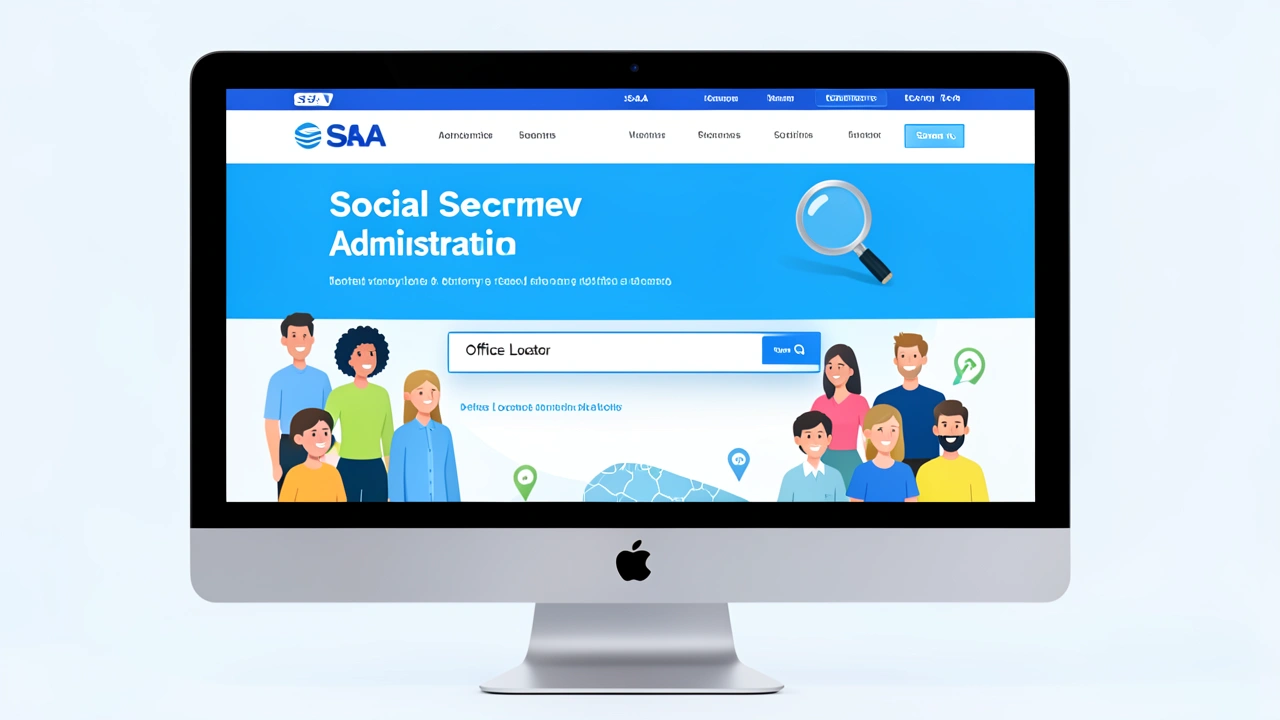
The easiest and quickest way to find your nearest Social Security office is by using their official website. This tool is designed to be very user-friendly, even if you’re not a computer expert. It uses your location information to give you exact directions and details about the office closest to you.
Knowing this information beforehand saves you time and avoids any confusion when you need to get important Social Security matters handled.
Using the Social Security Administration Website
The Social Security Administration (SSA) website has a dedicated tool to help you find offices. This tool is built with simplicity in mind, meaning you don’t need to be tech-savvy to use it effectively. It’s a straightforward process that takes just a few moments to complete.
The website acts like a digital map, guiding you directly to the service point you need.
When you visit the SSA website, look for a section often labeled “Contact Us” or “Office Locator.” This is your starting point. They have made this feature very accessible, so it’s usually easy to spot. Once you click on it, you’ll be prompted to enter some basic information about yourself.
Entering Your Location
The most common way to find your office is by typing in your home address. You can enter your full street address, city, and state. If you prefer not to share your street address, you can usually use your zip code instead.
Zip codes are also very effective in narrowing down the search to your specific area.
After you enter your address or zip code, the system will process this information. It then looks up all the Social Security offices within a certain radius of your location. The results will usually show you a list of nearby offices, with the closest one typically appearing at the top.
This direct approach ensures you get the most relevant results for your needs.
Many people find that using just their zip code is the simplest way to get started. It’s a quick way to see what’s available in your general vicinity. For example, if you live in a large city, using your zip code can help you identify the specific branch that serves your neighborhood.
The system is quite smart and takes into account your exact location within that zip code area.
What to Look for in the Results
Once you’ve entered your information, the website will present you with details about your nearest Social Security office. This usually includes the full street address of the office. You will also see the office’s phone number.
This is helpful if you need to call ahead to ask a question or confirm something before your visit.
Crucially, the results will show you the operating hours for that specific office. Social Security offices often have set hours, and these can sometimes vary by location or even by day of the week. It’s important to check these hours to make sure the office will be open when you plan to go.
Showing up when the office is closed would be a waste of your trip.
Additionally, the website might provide information on the types of services offered at that particular branch. While most Social Security offices handle a wide range of services, some smaller offices might focus on specific tasks. Knowing this in advance can help you prepare better for your appointment or visit.
Understanding Office Hours and Services
Social Security offices typically open their doors in the morning and close in the afternoon. Common hours might be from 9:00 AM to 4:00 PM, Monday through Friday. However, it’s always best to verify these times on the SSA website for the specific office you plan to visit.
Some offices might have different hours on certain days or observe federal holidays, closing for the day.
The services available at a Social Security office are extensive. You can apply for Social Security retirement, disability, or Medicare benefits. You can also get help with updating your Social Security record, reporting a change of address, or replacing a lost Social Security card.
If you have questions about your benefits, an office visit can provide direct assistance from a representative.
When you visit, remember to bring any necessary documents. This could include your Social Security card, identification like a driver’s license or state ID, and any paperwork related to your specific reason for visiting. For example, if you are applying for disability benefits, you may need medical records.
Having everything ready will make your interaction much smoother.
Alternative Ways to Find Your Office
While the online tool is the most common method, there are other ways to find your nearest Social Security office if you prefer not to use the website or need assistance. These methods can be just as effective and cater to different preferences or situations. Sometimes, a personal touch or a different approach can be very helpful.
Calling the Social Security Administration
You can always call the Social Security Administration’s national toll-free number. Their representatives can assist you in finding the closest office based on your location. This is a great option if you’re not comfortable using websites or if you have a lot of questions that you want answered immediately.
A phone call can provide personalized help.
The national number is 1-800-772-1213. When you call, be prepared to provide your address or zip code. The representative will look up the information for you and give you the details of the nearest office, including its hours of operation.
This method is direct and can be very reassuring for those who prefer speaking with a person.
It’s important to note that wait times for phone calls can sometimes be long, especially during peak hours. However, if you have the patience, it’s a reliable way to get the information you need. The representatives are trained to assist you with various Social Security matters, including finding local offices.
Visiting a Local Social Security Branch
If you happen to be in a general area where you suspect a Social Security office might be, you could also look for signs indicating a local branch. Sometimes, community centers or government buildings might house Social Security offices. This is less of a direct search method and more of an observational approach.
However, this method is not very efficient. You might wander around for a long time without finding the office. It’s always better to have a confirmed location before you set out.
The SSA aims to make its offices accessible, but they are not always in the most obvious places. Therefore, using the official tools is highly recommended.
Using Online Maps (with caution)
While not the primary method, you could use general online map services like Google Maps or Apple Maps. If you search for “Social Security office” in your area, these maps might show you some results. However, it’s crucial to cross-reference the information found on these general maps with the official SSA website.
General map services might not always have the most up-to-date information on office hours, specific services, or even the exact location. An office might have moved, changed its hours, or a listing might be outdated. Therefore, always confirm any information obtained from unofficial sources with the Social Security Administration’s official website or by calling their national number.

Preparing for Your Office Visit
Once you’ve found your nearest Social Security office, the next step is to prepare for your visit. Being well-prepared ensures that your time at the office is productive and that you can get the help you need without unnecessary delays. This involves gathering documents and knowing what to expect.
What Documents to Bring
The documents you need to bring depend on the reason for your visit. For general inquiries or to get a replacement Social Security card, you will likely need a valid photo ID, such as a driver’s license or state-issued ID. You will also need proof of your identity and citizenship, which could be a birth certificate or passport.
If you are applying for retirement or disability benefits, you will need much more extensive documentation. This can include proof of earnings, medical records, bank account information, and details about your work history. It’s a good idea to check the SSA website or call the office in advance to get a specific list of required documents for your situation.
For example, if you are applying for retirement benefits, you’ll need to show proof of your age (like a birth certificate), proof of citizenship or lawful alien status, and your earnings record information. If you’re applying for disability, you’ll need detailed medical records and information about your past employers. Bringing incomplete documentation is a common reason for delays.
Knowing What to Expect
When you arrive at the Social Security office, you will likely need to check in at the front desk or a designated service window. You may be given a number to hold until your turn. Be prepared for potential wait times, as offices can get busy, especially during peak hours or certain times of the year.
You will then be called to meet with a Social Security representative who can assist you. They are there to help you with your specific needs, whether it’s filling out forms, answering questions, or processing applications. Be clear and concise when explaining your reason for visiting.
Having your documents organized will help you present your case efficiently.
The atmosphere in a Social Security office is generally professional and service-oriented. Representatives are trained to assist a wide variety of people with different needs. While you might have to wait, the staff is usually helpful and knowledgeable.
Many people find that a face-to-face interaction can resolve complex issues more easily than trying to do it remotely.
Tips for a Smooth Visit
To ensure your visit goes smoothly, try to arrive a little early, especially if you have an appointment. This gives you time to find parking, go through any security checks, and check in without feeling rushed. If you don’t have an appointment, arriving earlier in the day or on a weekday might mean shorter wait times.
Be polite and patient with the staff. They are working to assist many people, and a positive attitude can make the experience better for everyone. If you have complex questions, it might be helpful to write them down before you go so you don’t forget anything important during your conversation.
This ensures all your concerns are addressed.
Consider whether you really need to visit in person. For some common tasks, like checking your Social Security statement or updating your address online, you might be able to complete them from home without the need for a visit. However, for applications or situations requiring detailed discussion, an in-person visit is often the best approach.
Always verify the best method for your specific issue.

Understanding Social Security Services
The Social Security Administration (SSA) provides a range of vital services beyond just retirement benefits. Understanding these services can help you know when and why you might need to interact with them, whether through an office visit or their online resources. Their work impacts millions of Americans daily.
Retirement, Disability, and Survivor Benefits
The most well-known services are the retirement, disability, and survivor benefits. Retirement benefits are what most people associate with Social Security, providing income for individuals after they stop working. Disability benefits offer financial support to individuals who are unable to work due to a medical condition that is expected to last at least one year or result in death.
Survivor benefits are paid to family members of a deceased worker who had earned enough work credits. This can include a spouse, children, or parents. These benefits help provide financial security to families during difficult times.
Applying for any of these benefits involves a thorough process and requires specific documentation.
The requirements for each benefit type vary. For retirement, it’s primarily based on your earnings history and age. For disability, it involves proving a severe medical condition that prevents substantial gainful activity.
Survivor benefits depend on the deceased worker’s record and the relationship to the claimant. The SSA website details these requirements extensively.
Medicare and Social Security Cards
Social Security also plays a role in Medicare, the federal health insurance program primarily for people aged 65 or older, as well as younger people with certain disabilities. While the Centers for Medicare & Medicaid Services (CMS) manages Medicare directly, the SSA handles enrollment and manages related inquiries for many beneficiaries. You often sign up for Medicare through the SSA.
Another crucial service is the issuance of Social Security cards. Every U.S. worker needs a Social Security number (SSN) to work and to receive benefits.
If you lose your card or need to correct information on it, you can apply for a replacement or a corrected card through the SSA. This requires providing proof of identity and citizenship.
The SSN is a unique identifier used for tracking earnings and benefits. It’s important to protect your Social Security card and number, as they are vital for financial and governmental purposes. Losing it or having it stolen can lead to identity theft, so safeguarding it is paramount.
Other Important Services
The SSA also handles programs like Supplemental Security Income (SSI), which provides financial assistance to adults and children with limited income and resources who are disabled, blind, or age 65 or older. This program is funded by general tax revenues, not Social Security taxes.
Additionally, you can update your information with the SSA, such as your name or address, which is crucial for receiving timely benefit statements and correspondence. They also provide resources for beneficiaries to manage their accounts and access information online. Understanding the full scope of services helps you utilize the SSA effectively.
For instance, if you’re planning for retirement, you can create an online account on the SSA website to view your earnings history and get an estimate of your future retirement benefits. This proactive approach allows you to plan your finances more effectively. The SSA is a key agency for financial security throughout life.
Frequently Asked Questions
Question: How do I know if I need to visit a Social Security office?
Answer: You may need to visit a Social Security office if you have complex questions about your benefits, need to apply for certain services that can’t be completed online, or need to submit original documents. For many routine tasks, like checking your benefit amount or updating your address, their website or phone line might be sufficient.
Question: Can I apply for benefits online?
Answer: Yes, you can apply for Social Security retirement, disability, and Medicare benefits online through the official Social Security Administration website. For some situations, like applying for Supplemental Security Income (SSI) or needing specific assistance, an in-person visit or phone call might be necessary.
Question: What if I don’t have a Social Security number?
Answer: If you need a Social Security number, you will need to apply for one. This usually involves visiting a Social Security office with proof of your age, identity, and U.S. citizenship or immigration status.
The process ensures that everyone who is eligible receives their unique number.
Question: Are Social Security offices open on Saturdays?
Answer: Social Security offices are typically not open on Saturdays. They usually operate from Monday to Friday during standard business hours. It’s always best to check the specific hours for your local office on the SSA website to confirm their operating days and times.
Question: Can someone else go to the Social Security office for me?
Answer: In some cases, someone else can visit the Social Security office on your behalf, but they will need proper authorization. This usually involves providing a completed Power of Attorney form or having legal guardianship. You will need to ensure the representative has the correct legal standing to act for you.
Summary
Finding your closest Social Security office is straightforward using the SSA’s online locator. Simply enter your address or zip code to see nearby offices, their hours, and services. If needed, you can also call the national number.
Be sure to bring necessary documents for your visit to ensure everything goes smoothly.