Getting your very first SIM card in the USA might seem a little tricky, especially if you’re new to the country or just not used to how things work here. There are a few different ways to go about it, and knowing the right steps makes it super easy. We’re going to walk you through it, step by step, so you can get connected right away without any fuss.
Think of this as your simple guide to making sure you have a phone that works perfectly for you here. Get ready to learn about all the simple options available.
Key Takeaways
- You will learn about the different types of SIM cards available in the USA.
- Discover the easiest places to buy a SIM card for your needs.
- Understand the documents you might need to make a purchase.
- Learn about prepaid versus monthly plans and how to choose.
- Find out how to set up your new SIM card and start using it.
- Get tips on saving money and getting the best deals on phone plans.
Getting Your SIM Card in the USA: A Simple Guide
This section will cover the basic steps and things you need to think about before you even go to buy a SIM card. We’ll talk about why you need one and what makes it different here compared to other places. It’s all about making sure you’re prepared so you don’t miss any important calls or messages.
Why You Need a SIM Card
A SIM card, which stands for Subscriber Identity Module, is a tiny chip that goes into your phone. It lets your phone connect to a mobile network. Without it, your phone can’t make calls, send texts, or use data to get online when you’re not near Wi-Fi.
It’s your phone’s ticket to the outside world.
Think of it like your phone’s ID card for the cell service. It holds information that identifies you to the network provider. This allows them to give you service and bill you correctly.
It’s a small piece of technology that enables a big part of modern communication.
- Connects you to mobile networks: This is the main job of a SIM card. It allows your phone to access services from companies like AT&T, Verizon, or T-Mobile.
- Enables calls and texts: Once your SIM is active, you can make and receive phone calls and send text messages to anyone.
- Provides mobile data: You’ll be able to use the internet on your phone when you’re away from Wi-Fi. This is great for maps, social media, and browsing.
Without a SIM card, your smartphone is essentially just a small computer that can only connect to the internet when it’s connected to Wi-Fi. This limits its usefulness significantly, especially when you’re out and about. A SIM card makes it a fully functional mobile device.
Different Types of SIM Cards
You’ll find that SIM cards come in different sizes. Most modern phones use what’s called a Nano-SIM, which is the smallest one. Older phones might use Micro-SIM or even Standard SIM cards.
It’s important to know what size your phone needs before you buy.
Most phone stores can help you figure this out. They often have tools to cut a larger SIM card down to the right size if needed. However, it’s always best to get the correct size from the start if you can.
This avoids any potential issues or needing extra steps.
SIM Card Sizes Explained
The three main sizes are:
- Standard SIM: This is the largest and least common in newer phones. It was common in older mobile phones.
- Micro-SIM: This is the middle size. It was popular for a while in smartphones before the Nano-SIM took over.
- Nano-SIM: This is the smallest and the current standard for most smartphones. If you have an iPhone or a recent Android phone, you probably need a Nano-SIM.
When you buy a new SIM card, it usually comes in a larger plastic card that you can pop out to get the size you need. This makes it flexible for different phones. But always check your phone’s manual or look up its model online to be sure of the size.
Where to Buy a SIM Card in the USA
There are several easy places to get a SIM card when you arrive in the USA. You don’t have to go to a big, fancy store. Many common places have them available.
Thinking about where you’ll be and what’s convenient is a good start.
The most common places are the official stores of the mobile carriers themselves. You can also find them at many retail stores, including big box stores and convenience stores. Even airports often have options to help travelers get connected quickly.
Mobile Carrier Stores
Visiting a store for a company like T-Mobile, AT&T, or Verizon is a straightforward way to get a SIM card. The staff there can help you choose a plan and set it up for you. They have all the information about their services right there.
These stores are great if you want a more personal touch and have questions. They can explain different phone plans, international calling options, and any deals they might have. They are usually very knowledgeable about their own products and services.
Retail Stores and Supermarkets
Many big retail stores, like Walmart, Target, and Best Buy, sell SIM cards from various mobile carriers. You can often find prepaid SIM cards in the electronics or mobile phone sections. This can be very convenient, especially if you’re already shopping for other things.
These stores usually carry SIM starter kits. These kits typically include the SIM card and instructions on how to activate it. You might need to purchase a prepaid plan separately or activate a plan online after buying the card.
Convenience Stores and Drugstores
Even smaller stores, like CVS, Walgreens, or 7-Eleven, sometimes sell prepaid SIM cards. These are good for getting a SIM card quickly, especially if you’re in a pinch and need to make calls soon.
The selection might be more limited at these types of stores. You’ll mostly find prepaid options. It’s worth checking if you need a SIM card and are near one of these locations.
Airport Shops
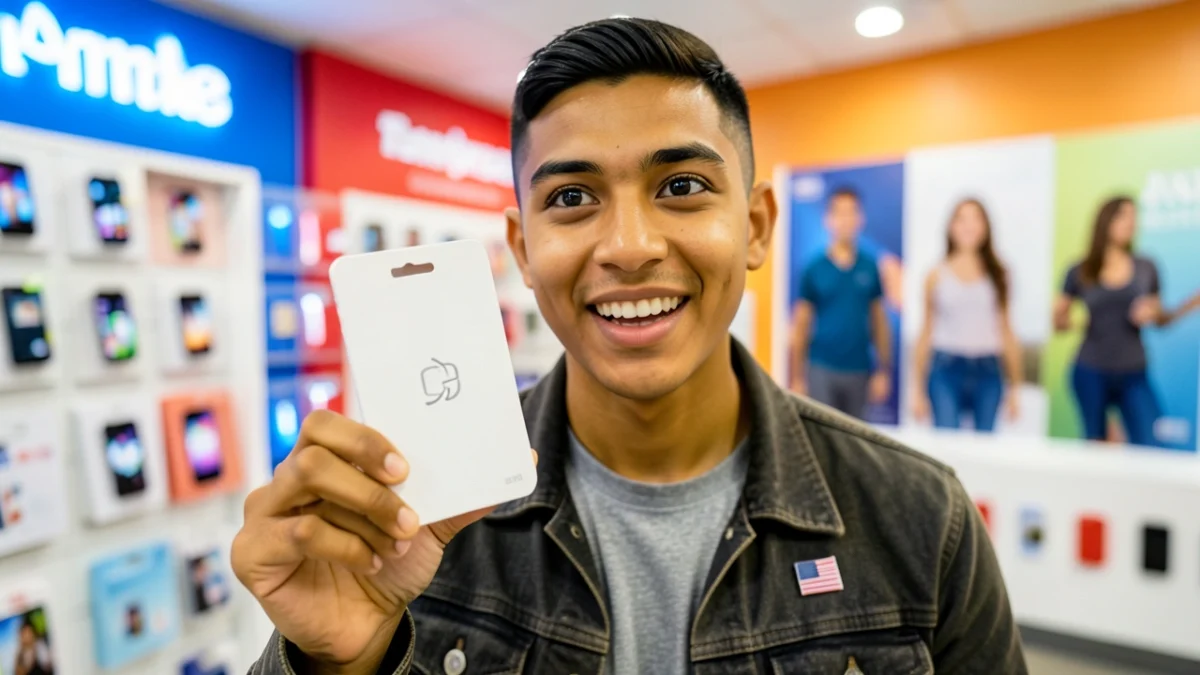
If you’re flying into the USA, you might find SIM card kiosks or stores right in the airport. These are designed for travelers and offer quick activation. It’s a great way to get connected as soon as you land.
The plans at airport shops might sometimes be a bit more expensive than buying elsewhere. However, the convenience of getting connected immediately can be worth the extra cost for many travelers.
Choosing a Mobile Plan: Prepaid vs. Monthly
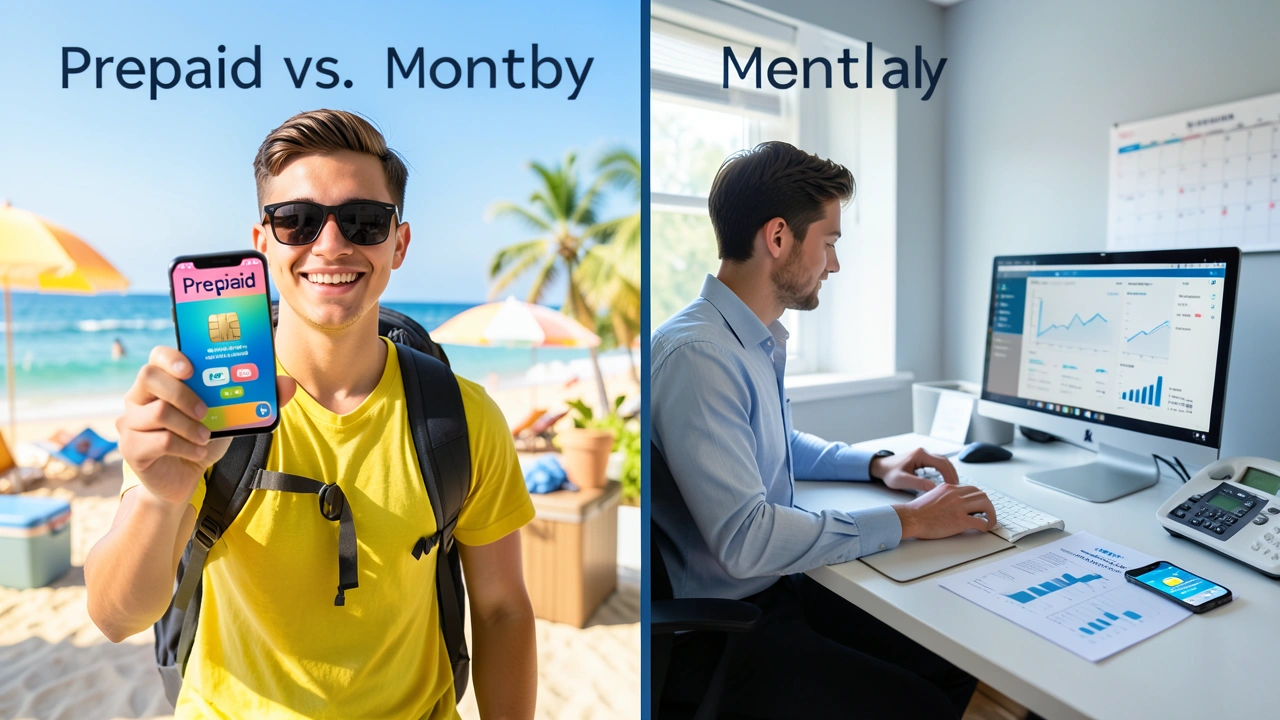
When you get your SIM card, you’ll need to decide on a mobile plan. The two main types are prepaid and monthly. Each has its own benefits, and the best choice for you depends on how you plan to use your phone.
Prepaid plans are like pay-as-you-go. You buy credit or a plan for a certain amount of time, usually a month. Monthly plans are a contract where you pay a set amount each month for your service.
Let’s look at which one might be better for you.
Prepaid Plans
Prepaid plans are very popular because they offer flexibility and no long-term commitment. You pay for your service in advance, so you know exactly how much you’re spending. This is great for people who don’t use their phone a lot or want to control their budget.
With a prepaid plan, you typically buy a monthly package that includes a certain amount of talk minutes, text messages, and data. If you use up your allowance before the month is over, you can often buy more, or you simply wait until your next payment cycle. This avoids surprise bills.
- No Credit Check Required: You don’t need a Social Security Number or a credit history to get a prepaid plan. This makes them very accessible for visitors or people new to the US.
- Budget Control: You can only spend the money you put on the plan. This prevents overspending and unexpected high bills.
- Flexibility: You can change your plan or stop service at any time without penalty. If your needs change, you can easily switch to a different plan or carrier.
- Good for Visitors: If you’re only in the US for a short time, prepaid is often the most practical and cost-effective option.
One of the main advantages is that there are no contracts. This means you are not tied down to a service for a specific period. If you find a better deal or your travel plans change, you can switch easily.
Examples of Prepaid Plans
Many companies offer prepaid plans. Some of the most popular include:
- Mint Mobile: Known for its low prices, especially if you buy service in bulk (3, 6, or 12 months upfront).
- T-Mobile Connect: A more affordable prepaid option from T-Mobile, offering various data amounts.
- AT&T Prepaid: Offers several plans with different amounts of data and unlimited talk and text.
- Verizon Prepaid: Similar to AT&T, providing various plans with set data limits and unlimited calls/texts.
- Simple Mobile: A T-Mobile-based MVNO (Mobile Virtual Network Operator) that offers affordable prepaid plans.
These plans can vary greatly in price and what they offer. For example, a basic plan with a few gigabytes of data might cost around $15-$25 per month, while a plan with unlimited data could be $40-$60 per month. Always compare the data allowances and any other features.
Monthly (Postpaid) Plans
Monthly plans, also called postpaid plans, are what many US residents use. You typically sign up for a contract, often for 12 or 24 months. You use the service throughout the month, and then you receive a bill for all the services you used.
These plans often come with more features or higher data limits than comparable prepaid plans. They can also be more convenient if you want to set up automatic payments and not worry about topping up.
- Potentially More Data: Postpaid plans often offer more generous data allowances or even unlimited data.
- Bundling Options: You can sometimes bundle your phone service with home internet or TV services from the same provider for potential savings.
- Device Financing: Many carriers allow you to finance the purchase of a new phone through monthly payments added to your bill.
- Builds Credit History: Paying your monthly phone bill on time can help you build a positive credit history in the US.
A major draw for monthly plans is the ability to get a new phone with a significant discount or on a payment plan. Carriers often offer deals on the latest smartphones when you sign up for a two-year contract.
Requirements for Monthly Plans
To get a monthly plan, you’ll usually need:
- Proof of Identity: A government-issued ID, like a driver’s license or passport.
- Social Security Number (SSN): Most carriers require an SSN to run a credit check.
- Credit Check: They will check your credit history to determine your eligibility and any deposit required.
- Deposit: If you have no credit history or poor credit, you might have to pay a deposit upfront, which is usually refundable after a certain period.
This is why monthly plans are often more challenging for temporary visitors or those new to the country. The credit check and SSN requirement can be a barrier. However, some carriers do offer plans that are easier to get started with, even if they are technically monthly.
Example Scenario: Sarah, a student from Canada, needs a phone for her studies in the US. She doesn’t have an SSN and her Canadian credit history isn’t recognized. She looks at AT&T’s monthly plans but finds she can’t qualify without an SSN and credit history.
She then considers T-Mobile’s prepaid options, which require no credit check and allow her to pay monthly with her Canadian debit card. She chooses a prepaid plan with 10GB of data, which fits her budget and usage needs perfectly.
How to Activate Your SIM Card
Once you have your SIM card and have chosen a plan, the next step is to activate it. This process is usually quite simple and can often be done online or over the phone. The instructions will come with your SIM card package.
Activation connects your SIM card to the mobile network. It’s like turning on your phone’s ability to make calls and use data. Most carriers have made this process very user-friendly, even for people who aren’t tech-savvy.
Steps for Activation
While the exact steps might differ slightly between carriers, here’s a general idea of what to expect:
- Insert the SIM Card: Make sure your phone is turned off. Open the SIM tray on your phone (usually on the side, you might need a small pin to eject it) and place your new SIM card in the correct orientation. Then, close the tray.
- Turn on Your Phone: Once the SIM is in, turn your phone back on.
- Follow On-Screen Prompts: Your phone might automatically detect the new SIM and guide you through the activation. You might see messages asking you to set up your account.
- Online Activation: Most carriers have a website where you can activate your SIM. You’ll usually need to enter your SIM card number (often found on the card itself or its packaging) and your phone number.
- Phone Activation: Some carriers allow you to activate by calling a specific number. This is helpful if you don’t have internet access on another device.
- Choose Your Plan: If you bought a SIM card without a specific plan already linked, you’ll need to select and pay for your chosen plan during activation. This is common with prepaid starter kits.
The whole process typically takes anywhere from a few minutes to a couple of hours. Once activated, you should be able to make calls and use data. If you encounter any issues, don’t hesitate to contact the customer service of your mobile carrier.
Troubleshooting Common Activation Issues
Sometimes, things don’t go as smoothly as planned. Here are a few things to check if you’re having trouble:
- Correct SIM Size: Ensure the SIM card is the correct size for your phone’s tray.
- Proper Insertion: Make sure the SIM card is seated correctly in the tray and the tray is fully closed.
- Phone Unlocked: Your phone must be “unlocked” to accept a SIM card from a different carrier. If you bought your phone from a carrier, it might be locked to their network. You may need to contact your previous carrier to unlock it.
- Restart Your Phone: Sometimes, simply turning your phone off and back on again can resolve connection issues.
- Check Coverage: Make sure you are in an area with good signal coverage for the carrier you chose.
If you’re still stuck, calling the carrier’s customer support is the best next step. They can look up your account and help you figure out what’s going wrong.
Setting Up Your New Phone Number
When you activate a new SIM card, you’ll usually be assigned a new phone number. This number is linked to your SIM card and your chosen plan. For prepaid plans, this number is yours as long as you keep the SIM active.
For some prepaid plans, you might have the option to bring your existing phone number with you, a process called “porting.” This is useful if you want to keep your old number. You’ll typically need your account number and PIN from your old carrier to do this.
Example Scenario: David has just arrived in New York and needs a US phone number. He buys a prepaid SIM card from T-Mobile at a local store. After inserting the SIM, he follows the on-screen prompts.
He is given a new US phone number instantly. He then uses the T-Mobile app to select a $30/month plan that includes unlimited talk, text, and 10GB of data. His service is active within 15 minutes.
Understanding Your Phone Number
Your phone number is how people will reach you. It’s a unique identifier on the mobile network. When you call someone, they will see this number appear on their caller ID.
It’s a good idea to write down your new phone number in a safe place, especially if you are new to the country. You might need it for forms, setting up accounts, or giving it to friends and family.
Tips for Saving Money on Your SIM Card and Plan
Getting a SIM card doesn’t have to be expensive. There are smart ways to find affordable plans and avoid unnecessary costs. It’s all about knowing where to look and what to compare.
Many companies compete for customers, which means good deals are often available. Being a little bit informed can save you a lot of money each month. This is especially true for prepaid plans, which offer a lot of variety.
Compare Different Carriers and Plans
Don’t just go with the first carrier you see. Take a few minutes to compare what different companies offer. Look at:
- Data Allowance: How much data do you actually need? Most people don’t need unlimited data.
- Price: Compare the monthly cost for similar plans.
- Coverage: Check if the carrier has good coverage in the areas where you’ll be using your phone the most.
- Customer Service: Read reviews about their customer support.
Some of the best deals can be found with Mobile Virtual Network Operators (MVNOs). These companies use the networks of the major carriers (like T-Mobile, AT&T, and Verizon) but often offer their services at lower prices. Examples include Mint Mobile, Google Fi, Visible, and Cricket Wireless.
Understanding MVNOs
MVNOs buy network capacity in bulk from the major carriers and resell it. Because they don’t own the network infrastructure, their operating costs are lower, allowing them to offer cheaper plans.
For example, Visible uses Verizon’s network and offers unlimited data plans for a flat monthly fee. Mint Mobile uses T-Mobile’s network and offers discounts for buying plans in bundles of 3, 6, or 12 months. These can be significantly cheaper than going directly with the major carrier.
Statistic: According to industry reports, MVNOs account for a significant portion of the US mobile market, with their subscriber base growing steadily due to competitive pricing and flexible plans.
Look for Deals and Promotions
Mobile carriers often have special offers, especially for new customers. Keep an eye out for:
- New Customer Discounts: Many plans are cheaper for the first few months or if you prepay for several months.
- Family Plans: If you’re traveling with others, a family plan can be more cost-effective than individual plans.
- Bring Your Own Device (BYOD) Deals: If you have an unlocked phone, bringing it to a new carrier can sometimes get you discounts or free service for a limited time.
Online reviews and comparison websites can be very helpful in finding these deals. Don’t be afraid to ask the carrier directly if they have any current promotions.
The Importance of an Unlocked Phone
Having an unlocked phone is a huge advantage. It means your phone is not tied to any specific carrier. You can buy a SIM card from any provider and use it in your unlocked phone.
If your phone is locked to a carrier (often the case if you bought it through a payment plan with that carrier), you can only use SIM cards from that specific company. If you want to switch to a cheaper provider, you’ll need to get your phone unlocked first. Most carriers have policies for unlocking phones after a certain period or if you’ve paid off the device.
How to Get Your First SIM Card in the USA: Practical Tips
Now that you know the steps, let’s summarize some practical advice for making your experience smooth. Getting a SIM card is a key step to staying connected and making the most of your time in the USA. These tips will help you get it done quickly and efficiently.
Remember to check your phone’s compatibility with US networks if you’re bringing a phone from another country. Most modern smartphones are designed to work globally, but it’s always good to double-check.
Essential Documents to Carry
When you go to buy a SIM card, especially if you’re considering a monthly plan, it’s good to have these with you:
- Government-Issued ID: Your passport is usually the best option if you’re a visitor. A driver’s license also works.
- Proof of Address (Sometimes): While not always required for prepaid, some carriers might ask for proof of where you are staying. This could be a hotel receipt or a lease agreement.
- Social Security Number (SSN) or Individual Taxpayer Identification Number (ITIN): This is mainly for monthly plans. If you don’t have one, focus on prepaid options.
For prepaid SIM cards, often just a simple ID is all you need. The requirements are much less strict, which is why they are ideal for short-term visitors or those without a US credit history.
Making the Most of Your Service
Once you have your SIM card and your phone is working, here are a few extra tips:
- Understand Your Plan: Read the details of your plan, especially regarding data limits, international calls, and roaming charges.
- Monitor Your Usage: Most carriers have apps or websites where you can track your data and minute usage to avoid going over.
- Customer Service: Save the customer service number for your carrier. They can help with any questions or issues you might have.
Using the carrier’s app is a very convenient way to manage your account. You can often pay your bill, check your usage, and even upgrade your plan directly through the app.
Frequently Asked Questions
Question: Can I use my phone from my home country in the USA?
Answer: Yes, if your phone is “unlocked.” An unlocked phone can accept a SIM card from any carrier. If your phone is locked to your home country’s carrier, you’ll need to contact them to have it unlocked before you can use a US SIM card.
Question: Do I need a Social Security Number to get a SIM card in the USA?
Answer: For prepaid SIM cards, you usually do not need a Social Security Number. You will likely need one for monthly (postpaid) plans, as they involve a credit check.
Question: How long does it take to activate a SIM card?
Answer: SIM card activation is usually quick, often taking anywhere from a few minutes to an hour. Some activations may take up to 24 hours, but this is less common.
Question: Can I keep my old phone number when I get a new SIM card?
Answer: Yes, this is called “porting” your number. You can usually transfer your existing number to a new SIM card. You will need your account number and PIN from your previous carrier to initiate the porting process.
Question: Are prepaid plans more expensive than monthly plans?
Answer: Not necessarily. While major carriers might price monthly plans competitively with bundled services or phone deals, prepaid plans, especially from MVNOs, can be very affordable for basic needs or for those who use their phones less frequently. It’s best to compare specific plans and carriers based on your usage.
Conclusion
Getting your first SIM card in the USA is a straightforward process. By understanding your options—prepaid versus monthly—and where to buy, you can easily get connected. Remember to check if your phone is unlocked and compare plans to find the best value.
You’ll be making calls and using data in no time!